
Last updated September 10, 2026
Full 25-point door and opener safety check with every visit - springs, cables, rollers, tracks, and your LiftMaster or Chamberlain opener included
You get a price before we start. It does not change when the truck arrives.
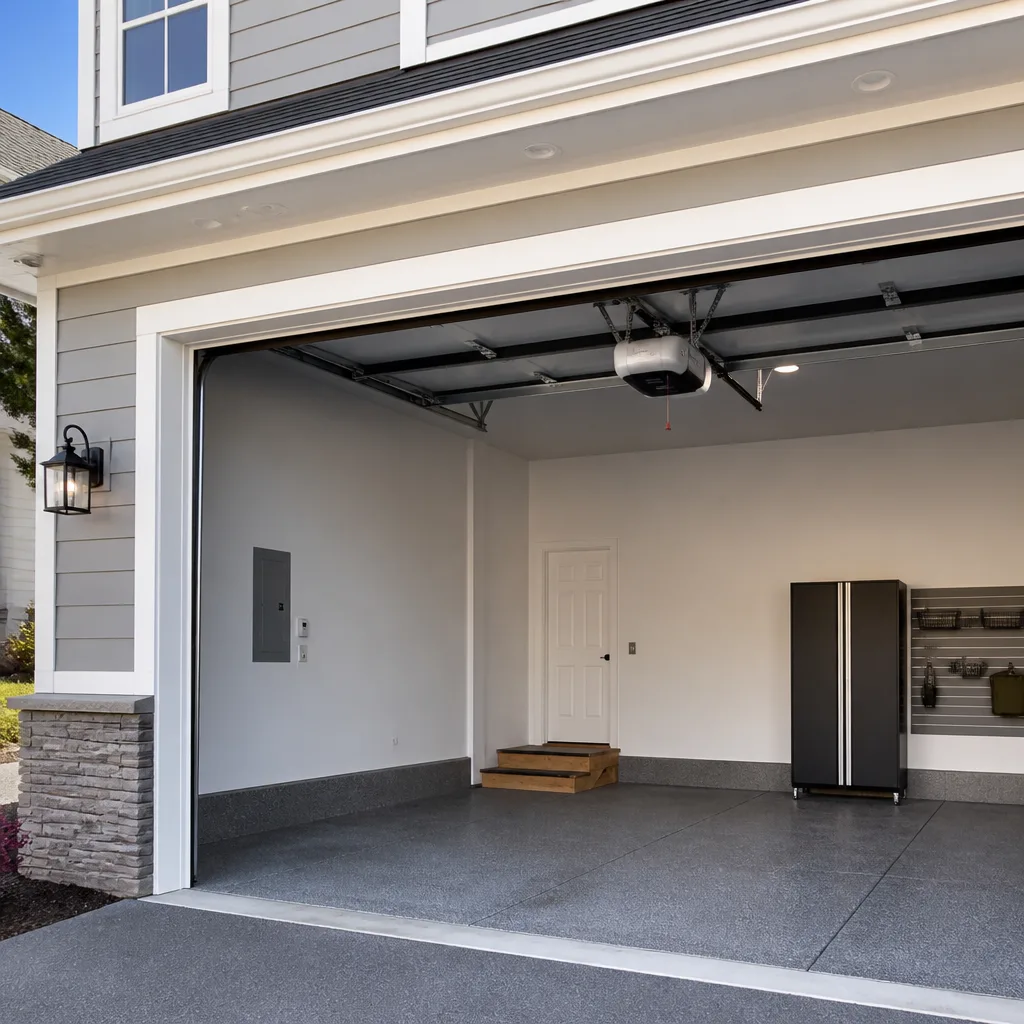
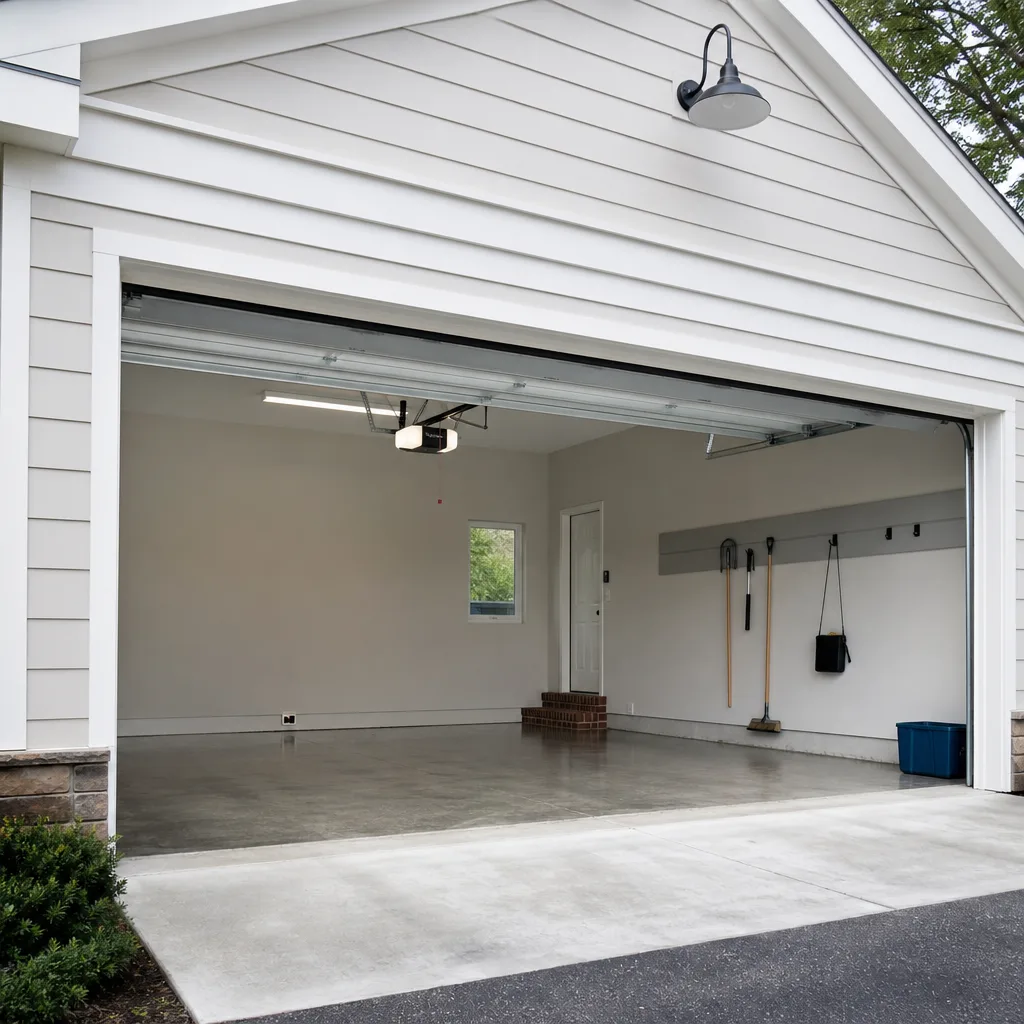
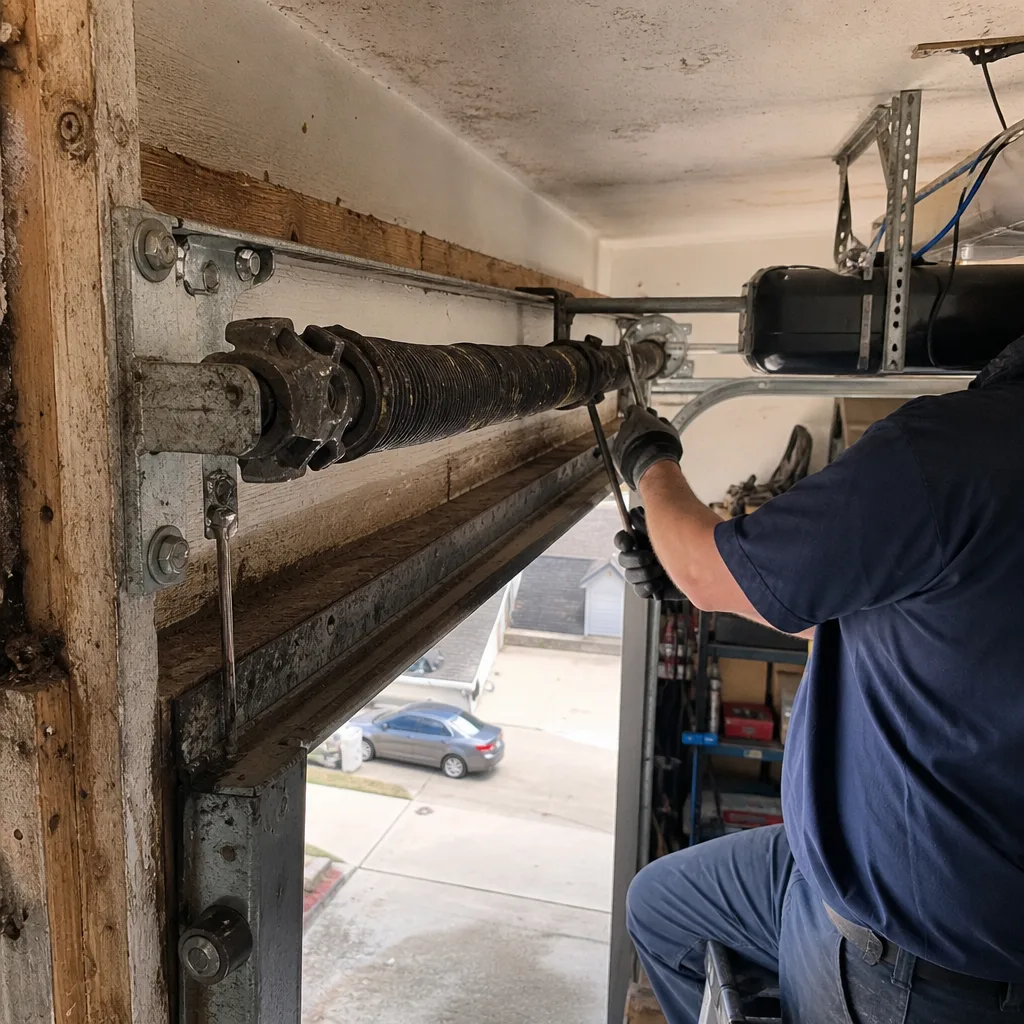 Before
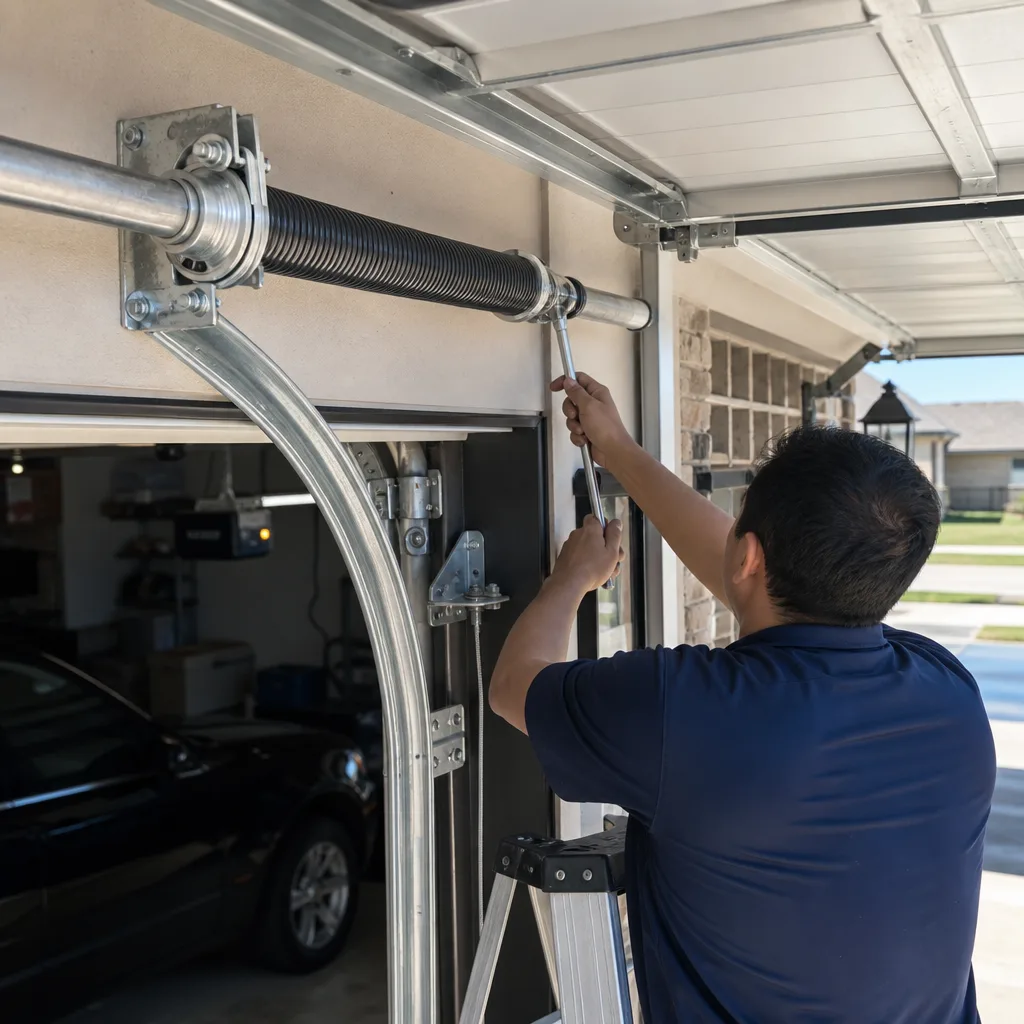 After
After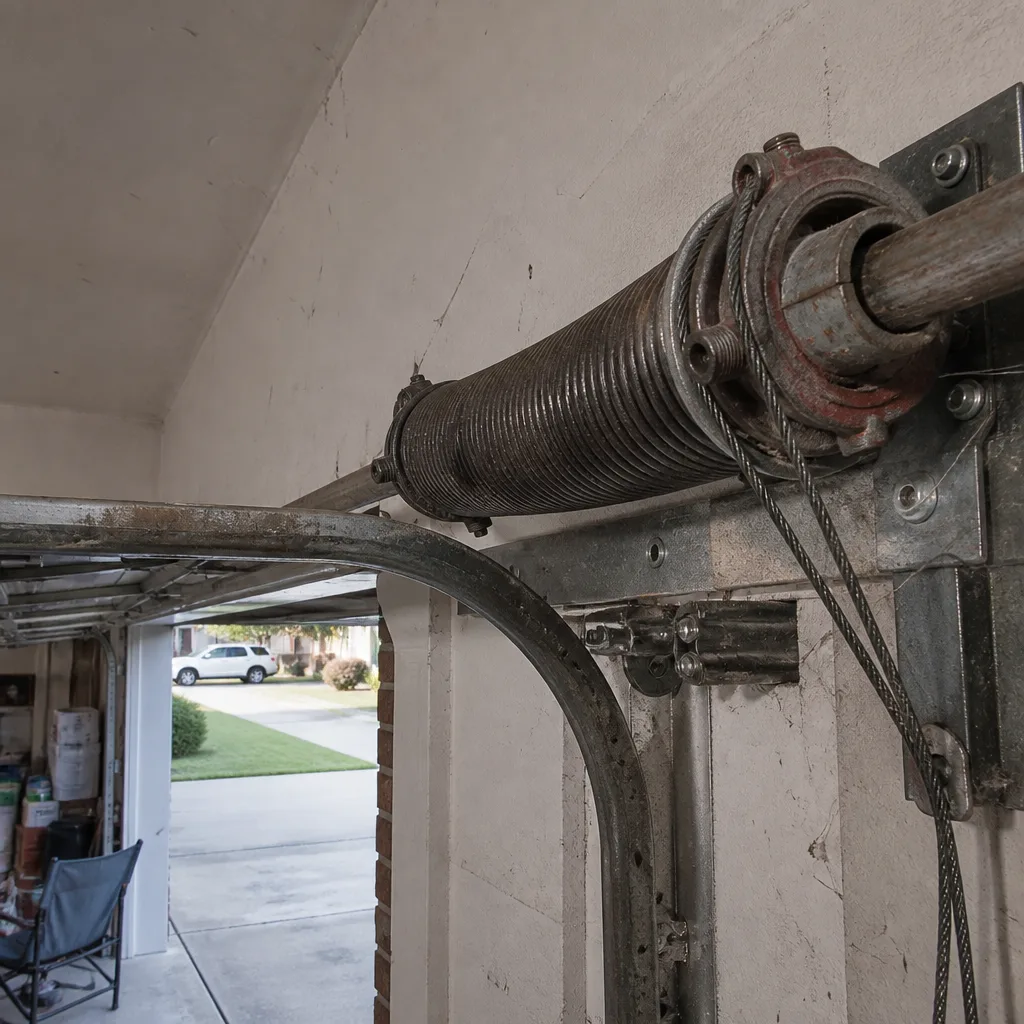 Before
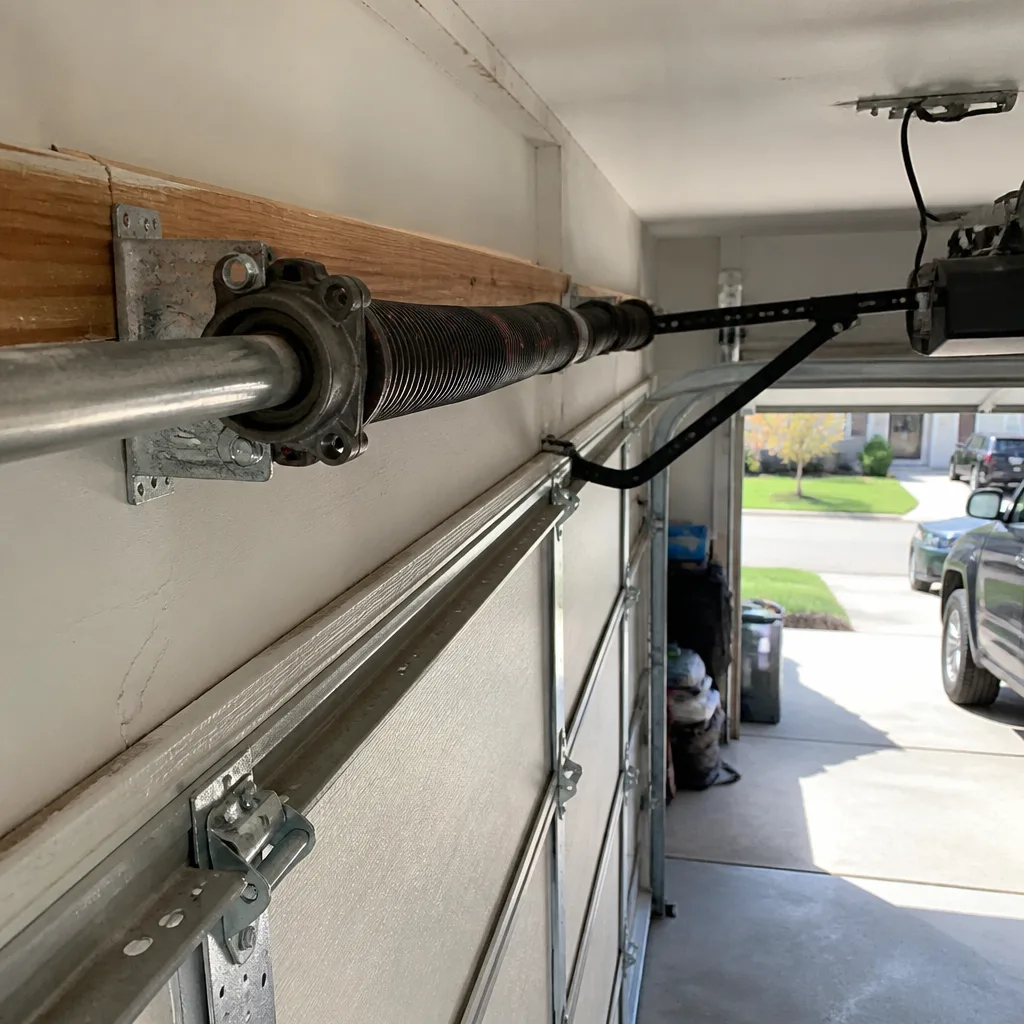 After
After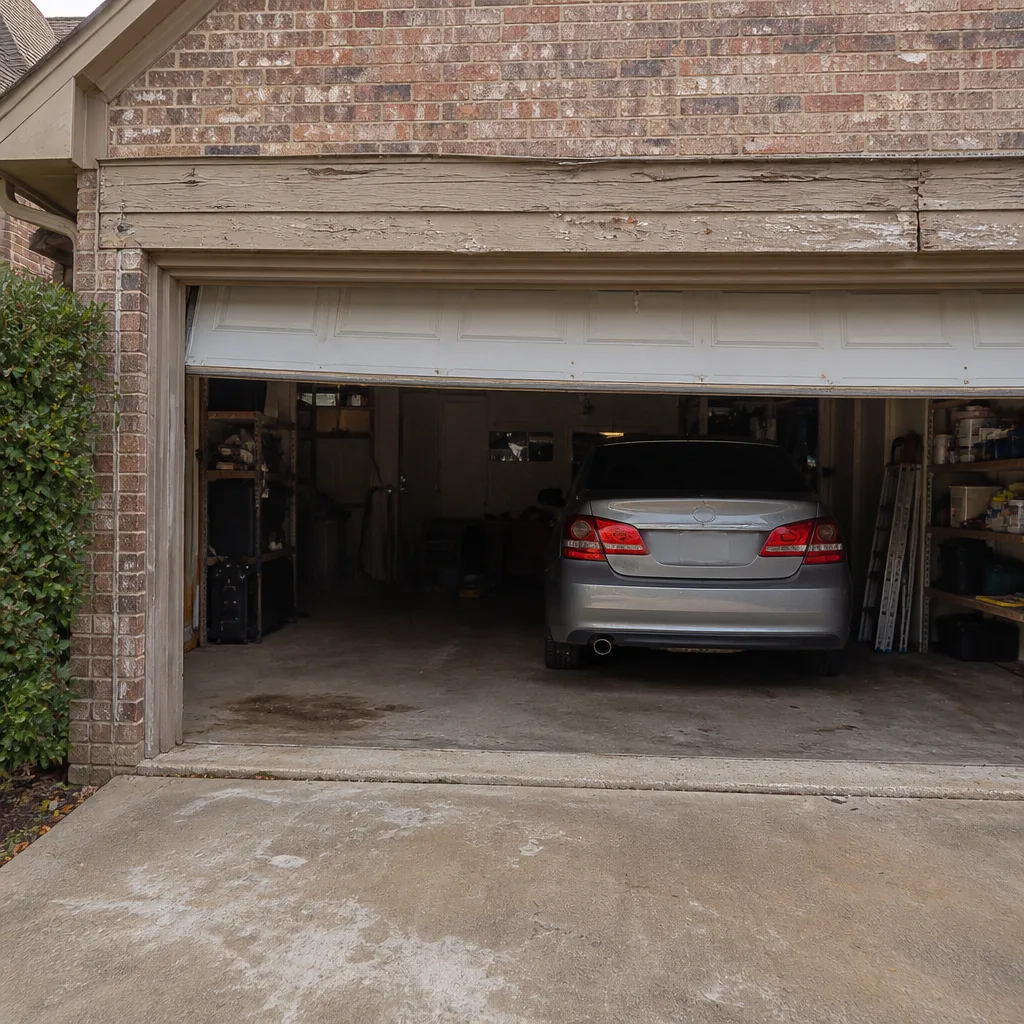 Before
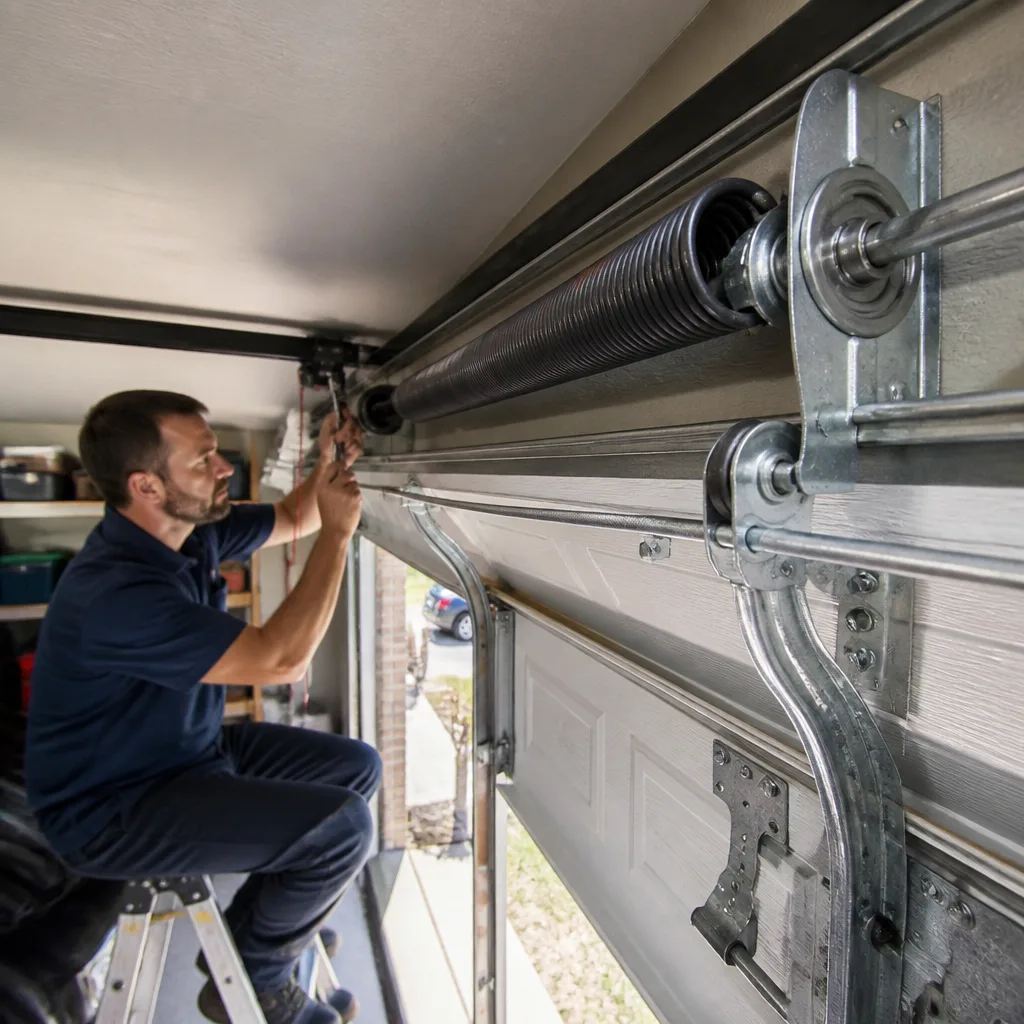 After
AfterDIY vs Professional Garage Door: The Allen Homeowner’s Decision Guide
Torsion springs store roughly 100 foot-pounds of torque when wound. A homeowner who releases that incorrectly doesn’t get a second attempt, and no amount of online tutorial changes that physics. In Allen, we’ve seen the aftermath in neighborhoods from Twin Creeks to Watters Creek - bent door sections, damaged vehicles, and worse. This guide draws a precise line between garage door work that’s genuinely safe to handle yourself and work where a mistake carries a hard physical consequence you cannot undo, and points you to more guides & resources when you’re ready to go deeper. You’ll learn which tasks belong in each category, what Allen’s summer heat does to your working window, and the three questions that should stop you before you start.
Quick Answer
Most Allen homeowners can safely replace weatherseal, lubricate hinges and rollers, and program remotes. Any work involving torsion springs, cable tension, or opener high-voltage wiring should be handled by a trained professional. The dividing line is not skill - it’s whether a mistake can cause serious injury or property damage before you can react.
Table of Contents
- What Homeowners Can Safely Handle
- The Danger Zone: Torsion Springs and Cables
- Opener Work: What DIY Looks Like
- How Allen’s Climate Changes the Equation
- The Real Cost of a DIY Mistake
- Three Questions Before You Start
- When Professionals Save Money
- Common Mistakes to Avoid
What Homeowners Can Safely Handle
Some garage door maintenance is genuinely within reach of a careful homeowner. The key is identifying tasks with a low consequence ceiling - work where a mistake means buying a $12 part again, not a trip to the ER.
Here’s what we tell Allen homeowners they’re equipped to handle:
- Weatherseal replacement. The rubber strip along the bottom of your door cracks after a few Texas summers. Slide the old seal out of the retainer, measure it against the new one, and feed the replacement through. No tension, no stored energy, no risk beyond a trip to the hardware store if you buy the wrong width.
- Hinge and roller lubrication. Use a silicone-based spray on the hinges where they pivot and on the roller stems where they sit in the track. Do not lubricate the track itself - that attracts grit and causes binding. In Allen’s dusty summer conditions, we see homeowners do this well; they just need to remember it’s a twice-yearly task, not a once-and-done fix.
- Remote and keypad programming. Most Chamberlain, Genie, and LiftMaster units have straightforward pairing sequences. The manual matters here - different series use different button combinations. Keep the manual, or find the PDF by model number. This is low-stakes troubleshooting: if it doesn’t work, you try again.
- Photo-eye alignment. When your door reverses for no visible reason, the safety sensors at the bottom of the track are often knocked askew. Clean the lenses, check that both LEDs show steady light, and adjust until they match. If one LED stays dark, the sensor may have failed - that’s when you call.
- Manual release operation. Every homeowner should know how to pull the red handle and operate the door by hand during a power outage. Test it once, feel the weight, and note whether the door stays put at half-height or drifts down. Drift means spring imbalance - a professional matter.
These tasks share a common trait: if you stop halfway, nothing bad happens. The door stays where it is. The stored energy remains contained. You can walk away and call garage door repair in Allen without creating a hazard.
One Allen-specific note: the hard water and mineral content in our area accelerates corrosion on hardware. A homeowner who keeps up with lubrication and watches for rust spots catches problems early, before they migrate into the danger zone - which is why we publish a Garage Door Repair Maintenance Checklist for Allen Homeowners each season.
The Danger Zone: Torsion Springs and Cables
This is where the physics cannot be argued with.
A standard residential torsion spring is wound tight enough to counterbalance 150 to 250 pounds of door weight. When that spring breaks, the door becomes dead weight. When an intact spring is unwound incorrectly, that stored energy releases in a quarter-second. The winding bars can strike with enough force to break bones. We’ve seen steel bars bent double from a slip.
In Allen, we regularly see spring failures in the Twin Creeks and Waterford neighborhoods where homes were built in the late 1990s and early 2000s. Those original springs are hitting 20 to 25 years of cycles. When they go, homeowners face a decision.
Why DIY spring replacement fails:
- Winding bars must be the correct diameter and inserted fully into the cone. A 3/4-inch bar that slips out mid-wind becomes a projectile.
- The set screws on the winding cone require precise torque. Too loose and the spring unwinds under load. Too tight and you strip the cone, turning a $200 repair into a $600 door replacement.
- Two-spring systems must be balanced against each other. An uneven wind puts all load on one spring, causing premature failure - often within weeks.
- Spring size must be calculated by door weight, not by matching the old spring’s paint color. A spring that’s one wire size too light will work briefly, then fail catastrophically.
Cables carry similar risk. They’re under tension when the door is closed, and they can whip when released. We’ve responded to calls in Allen’s Stacy Green neighborhood where a homeowner cut a cable to “make it easier to remove” and found the cable end had buried itself in the drywall.
The Mainspring Garage Door Co. home page outlines our approach: we arrive with the right springs on the truck, sized by door weight, and we stand behind the work. But the larger point is that no YouTube video changes the energy stored in that spring. The confidence gap between watching and doing is measured in foot-pounds.
Opener Work: What DIY Looks Like
Opener work sits in a middle zone. Some of it is genuinely accessible. Some of it triggers Garage Door Permits, Codes & Inspections in TX: What You Need to Know that most homeowners haven’t considered.
DIY-appropriate opener work:
- Replacing a remote or wireless keypad
- Adjusting travel limits when the door doesn’t fully close or open
- Replacing the light bulb (use LED if the manual allows it; heat from incandescents damages circuit boards in Texas attics)
- Installing a battery backup unit on a compatible new opener, following manufacturer instructions exactly
Opener work that requires professional knowledge:
Hardwired wall controls and safety sensor wiring run at low voltage, but the opener itself connects to 120V household power. Any modification to that supply - adding a new outlet, extending the pigtail, hardwiring instead of plugging in - triggers electrical code requirements. Allen follows the Texas Electrical Code, amended locally. Work that isn’t permitted or inspected can void your homeowner’s insurance if a fire results.
More critically, modern openers include force-sensitivity settings that must be calibrated to the door’s actual weight. A door with a weakening spring feels heavier to the opener. If you increase the force setting to compensate, the opener won’t reverse properly when it hits an obstruction. That’s how a pet or child gets injured.
We see this in Allen’s older neighborhoods like Bethany Ridge, where original openers from the 1980s and 1990s are still in service. Homeowners adjust and adjust until the opener either tears itself apart or becomes a safety hazard. Garage door opener in Allen work is often a full-system evaluation, not a single-part swap.
For homeowners considering a new opener, brands like Chamberlain and Genie offer models with straightforward rail assembly that a careful DIYer can manage. The catch is the door balance check that must precede installation. An unbalanced door will destroy a new opener in months. That check requires releasing the door from the opener and testing by hand - which brings you back to spring knowledge.
How Allen’s Climate Changes the Equation
Allen summers are not a minor detail. They reshape what’s possible for DIY work.
From June through September, garage temperatures in Allen routinely reach 110 to 120 degrees. Metal expands. Lubricants thin and run. Sweat interferes with grip. A task that takes 30 minutes in March takes 90 minutes in August, and the fatigue factor multiplies error risk.
We’ve measured this directly. A spring replacement that our technicians complete in 45 minutes during mild weather stretches past an hour in peak summer. For a homeowner working without a helper, without a shaded driveway, without the muscle memory of a thousand prior jobs, the time multiplier is closer to 3x. Fatigue at minute 75 is where mistakes happen.
The heat also affects materials:
- Steel springs lose some tension when hot, then regain it when cool. A spring adjusted in summer may be overtight in winter, stressing hardware.
- Vinyl weatherseal becomes pliable and difficult to seat straight in high heat.
- Opener electronics in uninsulated garages operate near their thermal limit, accelerating failure in July and August.
Allen sits on the Blackland Prairie with clay-heavy soil that shifts seasonally. That movement affects door alignment over time. A door that ran straight in spring may bind by fall. Homeowners who notice binding often adjust the track or force settings instead of addressing the underlying settlement. The adjustment masks the problem until something breaks.
Our recommendation: if you’re going to attempt DIY maintenance, do it in March, April, October, or November. The $89 Seasonal Tune-Up we offer exists partly because we know homeowners who intended to handle it themselves find the summer conditions overwhelming. There’s no shame in that. The shame is in pressing forward when conditions have turned against you.
The Real Cost of a DIY Mistake
Homeowners often compare the $200 professional spring replacement against the $80 spring from a hardware store and see savings. That comparison omits the full cost structure of a mistake.
Here’s what we’ve documented from calls following DIY attempts in Allen:
| Scenario | DIY Attempt Cost | Professional Remediation | Total Out-of-Pocket |
|---|---|---|---|
| Spring wound incorrectly, door crashes down | $80 spring, $40 tools | $280 door section replacement, $200 spring re-work | $600 |
| Winding bar slips, hand injury | $80 spring, $40 tools | ER visit ($2,800-$4,500 with imaging), $200 professional spring install | $3,120-$4,820 |
| Wrong spring size installed, opener damaged | $80 spring | $450-$650 opener replacement, $200 spring correction | $730-$930 |
| Cable released improperly, track bent | $25 cable | $180 track repair, $150 cable re-tensioning | $355 |
The ER visit is not theoretical. We’ve spoken with Allen homeowners who’ve experienced it. The hand and wrist injuries from winding bar slips are severe enough to require surgery. One homeowner in the Montgomery Farm area spent a morning in the ER and the afternoon watching us complete in 40 minutes what he’d attempted for three hours.
Insurance adds another layer. Most homeowner policies exclude injury from “work performed by the insured for which the insured was not qualified.” A DIY spring replacement that results in property damage or personal injury may not be covered. The professional’s general liability and workers’ compensation exists precisely for this transfer of risk.
Our garage door installation in Allen service includes proper spring sizing as standard. The price is stated before work begins. The alternative is gambling with physics and hoping your insurance adjuster is generous.
Three Questions Before You Start
Before you open the toolbox, answer these honestly. They determine whether to proceed or to call.
1. Can I walk away halfway through without creating a hazard?
This is the consequence-ceiling test. If you stop mid-task, does the door remain secure? Can children or pets enter the garage safely? With weatherseal replacement, yes. With a partially unwound torsion spring, absolutely not. The spring is unstable in any position between fully wound and fully released. You cannot pause for dinner. You cannot answer the phone. You must complete the sequence or secure the hazard, which requires knowledge most homeowners don’t have.
2. Do I have the right tools, not approximations?
Winding bars are not substitute-able. A screwdriver, a nail, or a piece of rebar that “looks about right” will slip. The correct diameter is stamped on the spring cone. The correct length provides full hand clearance from the cone. We’ve seen Allen homeowners use adjustable wrenches on set screws designed for specific socket sizes. The screw rounds. The tool slips. The sequence fails.
For opener work, a non-contact voltage tester is essential before touching any wiring. Most homeowners don’t own one. A multimeter set wrong gives false confidence. The right tool for electrical work is specific and non-negotiable.
3. Have I seen this exact scenario, not a similar one?
YouTube videos show ideal conditions: new hardware, clean lighting, a helper holding the camera. Your door is 22 years old, the hardware is corroded, and you’re working alone at 2 PM on a Saturday because it failed mid-cycle. The video didn’t show how to handle a frozen set screw. It didn’t show what happens when the spring cone is slightly distorted from the last replacement. Similar is not identical, and garage door hardware doesn’t forgive approximation.
If any answer is no, the task belongs to a professional. That’s not a failure of capability. It’s a correct risk assessment.
When Professionals Save Money
The conventional framing - DIY saves money, professionals cost more - reverses in garage door work for several scenarios common in Allen.
Aging doors in established neighborhoods. In Allen’s older sections, a 25-year-old door has accumulated issues: track wear, roller flattening, hinge elongation, and spring fatigue. Addressing one symptom ignores the system. A professional evaluation identifies what’s actually failing versus what’s merely noisy. We’ve saved homeowners in Watters Creek from replacing an entire door when only the track and rollers needed attention.
Opener replacement on an unbalanced door. The new opener fails within a year. The homeowner blames the brand. The actual cause is a door that requires 30 pounds of force to lift instead of the designed 10 pounds. The opener works itself to death. A professional measures and corrects balance before installation.
Warranty preservation. New doors from Clopay and Amarr carry manufacturer warranties that require professional installation. DIY installation voids coverage. The savings evaporate when a panel defect appears in year three.
Single-visit completion. Our trucks carry springs sized for common door weights, cables in standard lengths, and rollers, hinges, and openers from major brands. Most jobs finish in one visit. A homeowner who orders the wrong spring waits a week, pays shipping both ways, and still faces the original problem. Time has value. So does not having your car trapped in the garage through a work week.
The 90-Day Done Right Promise we offer exists because we know the cost of rework. If it’s not right, we return. No paperwork, no arguing, in writing on every job. A DIY repair that fails has no such backstop.
Common Mistakes to Avoid
- Using a screwdriver as a winding bar. In StarCreek and elsewhere, we’ve seen the aftermath. The shaft flexes, the tip camms out of the cone, and the hand holding it takes the impact. Winding bars are solid steel, specific diameter, minimum 18 inches long. Nothing else qualifies.
- Removing both springs on a two-spring system simultaneously. The second spring holds tension while you replace the first. Remove both and the door becomes uncontrolled dead weight. We’ve responded to calls where the door has fallen onto a vehicle or the garage floor.
- Adjusting opener force settings to compensate for a heavy door. This masks spring failure until the opener fails or someone gets hurt. The correct response to a door that “seems heavier” is spring evaluation, not opener adjustment.
- Working in direct summer sun without hydration or a helper. Allen’s July heat has caused homeowners to become dizzy on ladders. A fall from a six-foot stepladder carries serious injury risk, compounded by the garage door hardware you’re carrying.
- Ignoring the door’s weight specification. Springs are sized by IPPT (inch-pounds per turn), derived from door weight and drum geometry. The color code on the old spring may be faded or non-standard. Guessing produces a spring that’s dangerous whether too strong or too weak.
- Disconnecting the opener without bracing the door. The manual release handle is for emergency operation, not for creating working clearance. A door with a broken spring will crash when disconnected. We’ve repaired the resulting damage in Allen homes from Lost Creek Ranch to The Villages of Allen.
When to Call a Professional
Call when the task involves stored mechanical energy, electrical supply modification, or system-level diagnosis. That covers torsion springs, extension springs, cable replacement, track realignment, opener electrical work, and any situation where the door’s behavior has changed suddenly.
Call when you cannot answer “yes” to all three questions above. Call when the garage temperature is above 95 degrees and the task exceeds 15 minutes. Call when the door is stuck in a partially open position and your vehicle is trapped inside.
Mainspring Garage Door Co. offers free estimates in Allen. A technician evaluates, states the flat price before any work begins, and most repairs finish in a single visit because the right parts travel on the truck. Call (214) 692-2338. A live person answers, including nights, weekends, and holidays.
Frequently Asked Questions
Most residential torsion spring replacements in Allen range from $180 to $340, depending on door size, spring type, and whether one or both springs require replacement. The price includes the correct spring sized by door weight, professional installation, and disposal of the old spring. We state the exact price before any work begins. Call (214) 692-2338 for a free estimate - there’s no charge to know what you’re facing.
You can, but you shouldn’t. Springs installed as a pair have cycled together and developed similar fatigue. Replacing one leaves an imbalanced system that strains the new spring and the door hardware. The door may operate unevenly, tracks may wear prematurely, and the remaining old spring will fail soon after. We replace both springs in a paired system, sized identically, so the door remains balanced through its full cycle.
The most common sign is a door that feels extremely heavy when operated manually or an opener that strains, lifts partially, or won’t move the door at all. You may also see a visible gap in the torsion spring above the door, or hear a loud bang from the garage - the sound of the spring releasing its stored energy. If you suspect a broken spring, do not attempt to open the door repeatedly. The cables and opener are now carrying load they weren’t designed for. Disengage the opener and call for service.
Yes. Weatherseal replacement, hinge and roller lubrication, remote programming, and photo-eye cleaning and alignment are genuinely low-risk tasks. Each can be interrupted without hazard, requires no special safety equipment beyond gloves, and has a low consequence for error. Start with these to learn your door’s behavior. Graduate to more complex tasks only if you develop the tool collection and judgment that comes with repeated successful work.
Garage door replacement itself typically does not require a permit in Allen, but electrical modifications to the opener supply may. If your project involves adding a new outlet, hardwiring the opener, or extending circuit capacity, the work falls under electrical permitting requirements. A licensed professional carries the appropriate credentials and arranges inspection when required. Unpermitted electrical work can complicate home sales and insurance claims.
A standard 10,000-cycle spring lasts roughly 7 to 10 years for a typical household with two cars. In Allen, the heat cycling - expansion in summer, contraction in winter - adds stress that can reduce lifespan slightly compared to milder climates. Higher-cycle springs (20,000 or 30,000 cycles) are available and represent better long-term value for homeowners planning to stay in place. We size and quote these options during any evaluation.
The Bottom Line
The DIY versus professional decision for garage door work is not a test of your competence. It’s a test of whether the task’s consequence ceiling fits within what you can accept if something goes wrong. Weatherseal, lubrication, and remote programming pass that test. Torsion springs, cable tension, and electrical modifications do not. Allen’s summer heat, the specific wear patterns of our local housing stock, and the physics of stored energy all push the same direction: know the line, respect it, and call when you’ve crossed into territory where a mistake doesn’t offer a redo. The homeowners who sleep well are the ones who made the right call, not the ones who gambled and won.
Written by Carl Dutton, Owner at Mainspring Garage Door Co., serving Allen since 2016.