
Last updated September 10, 2026
Full 25-point door and opener safety check with every visit - springs, cables, rollers, tracks, and your LiftMaster or Chamberlain opener included
You get a price before we start. It does not change when the truck arrives.
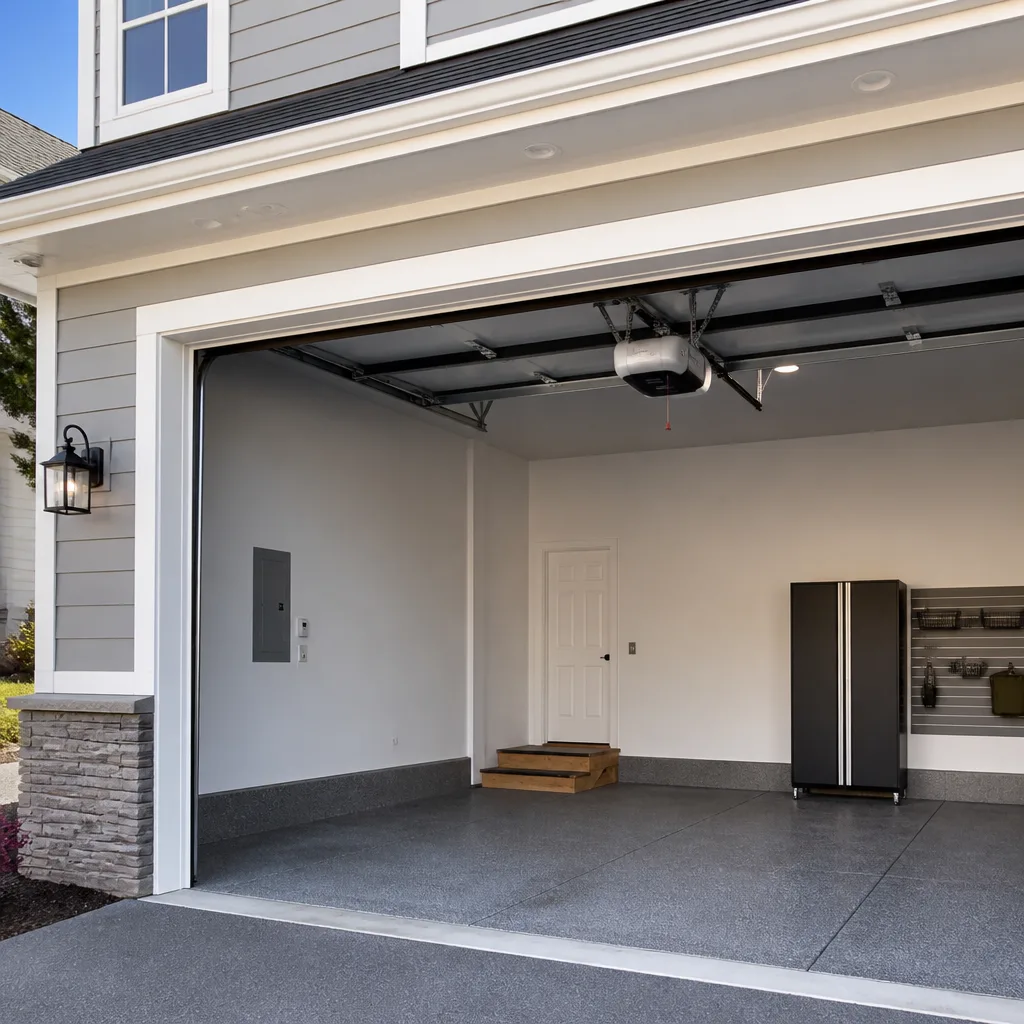
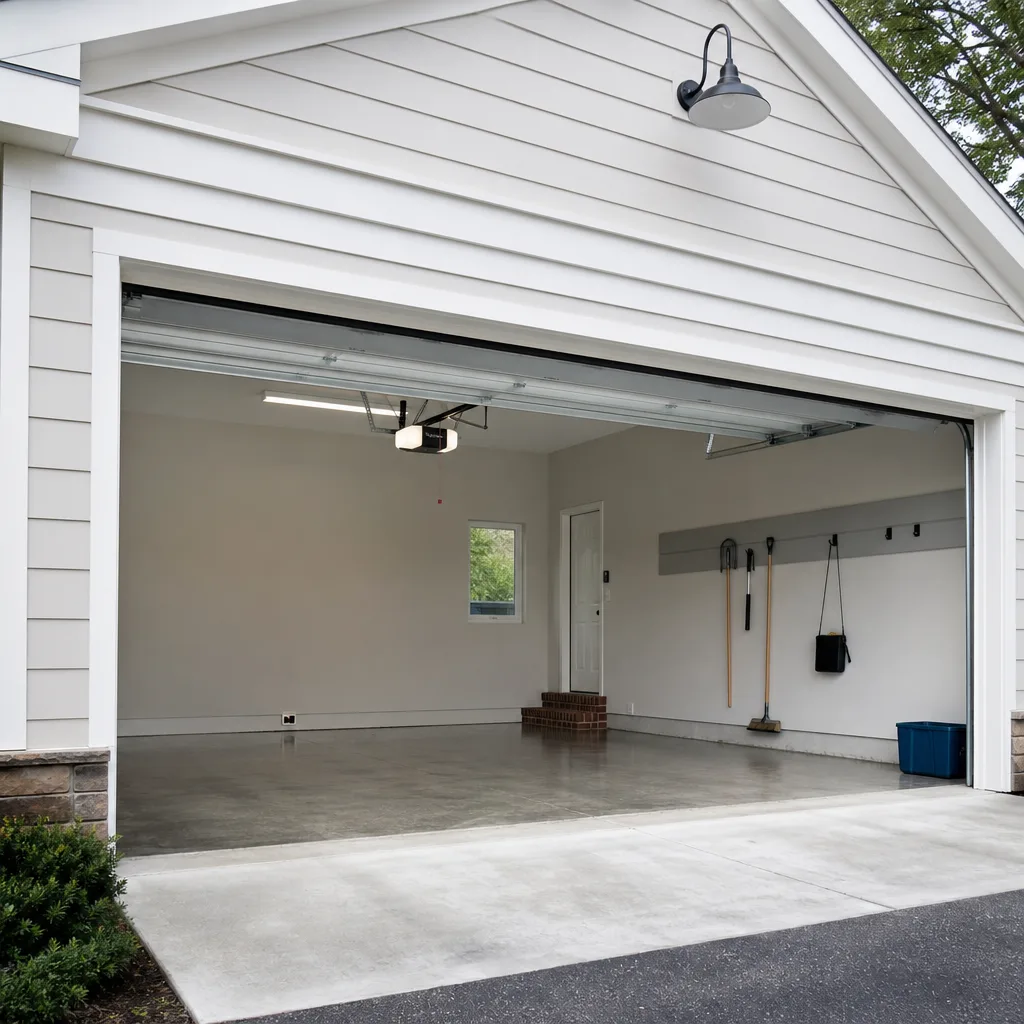
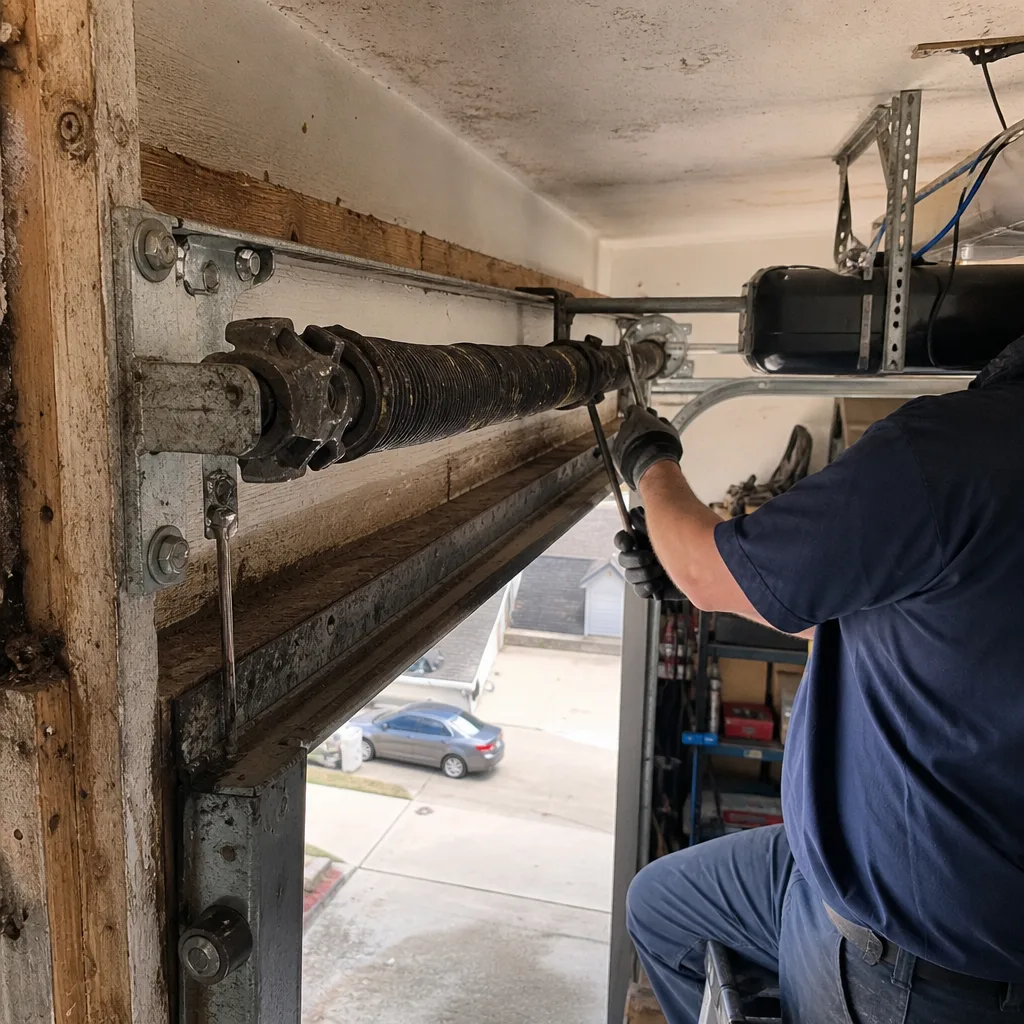 Before
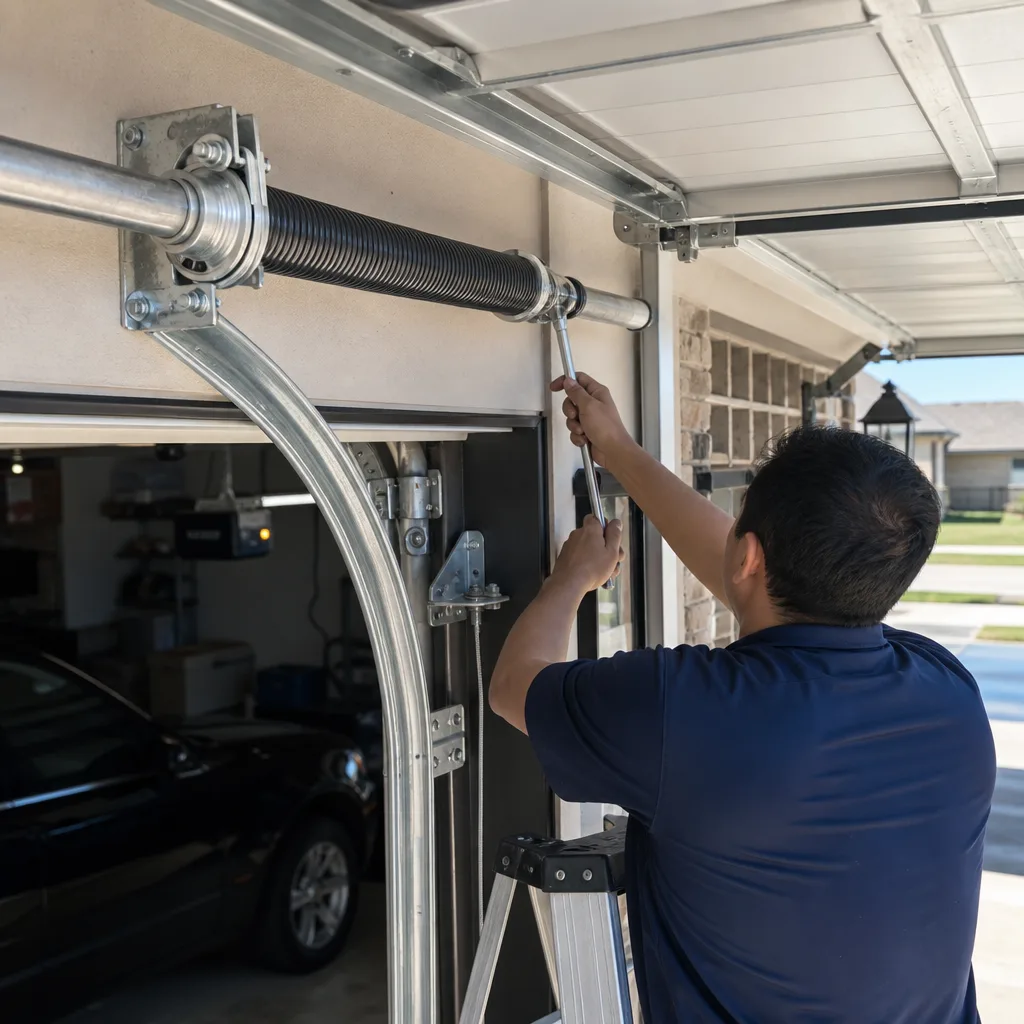 After
After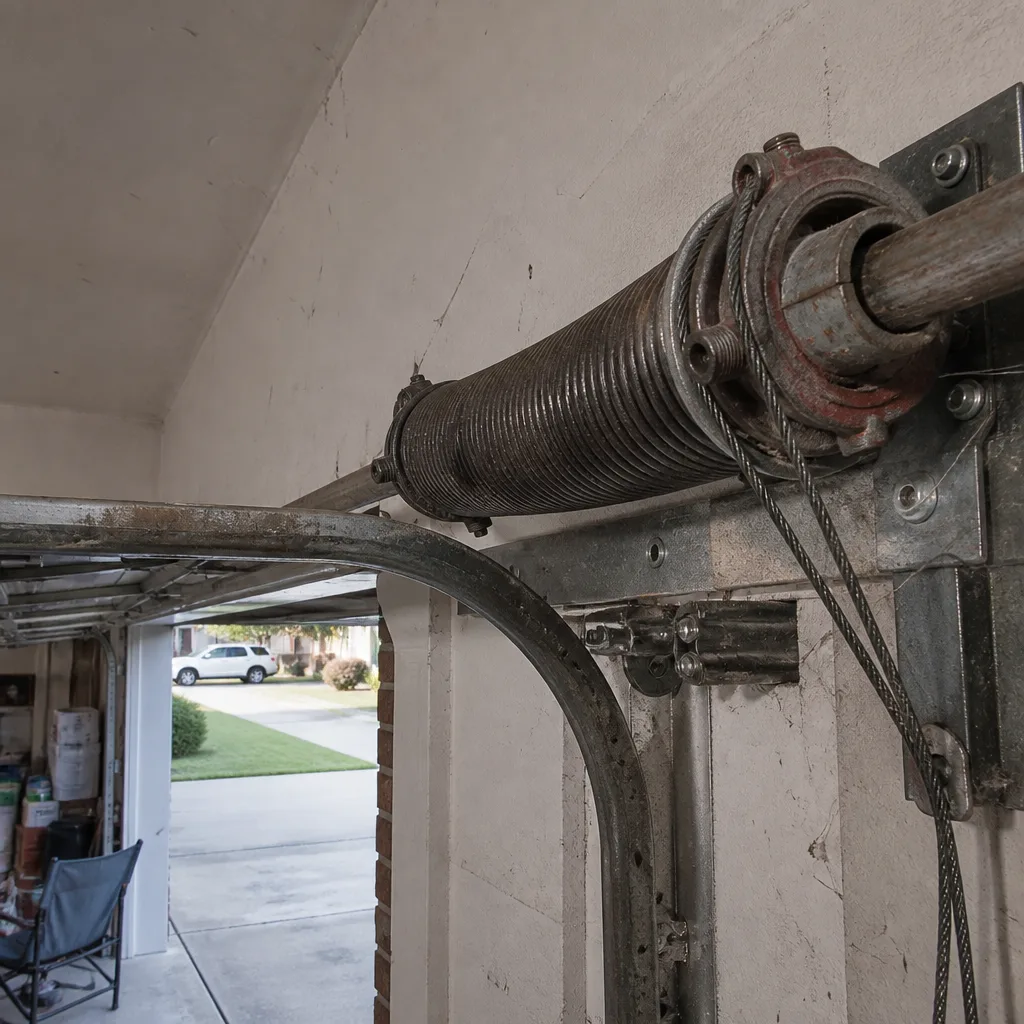 Before
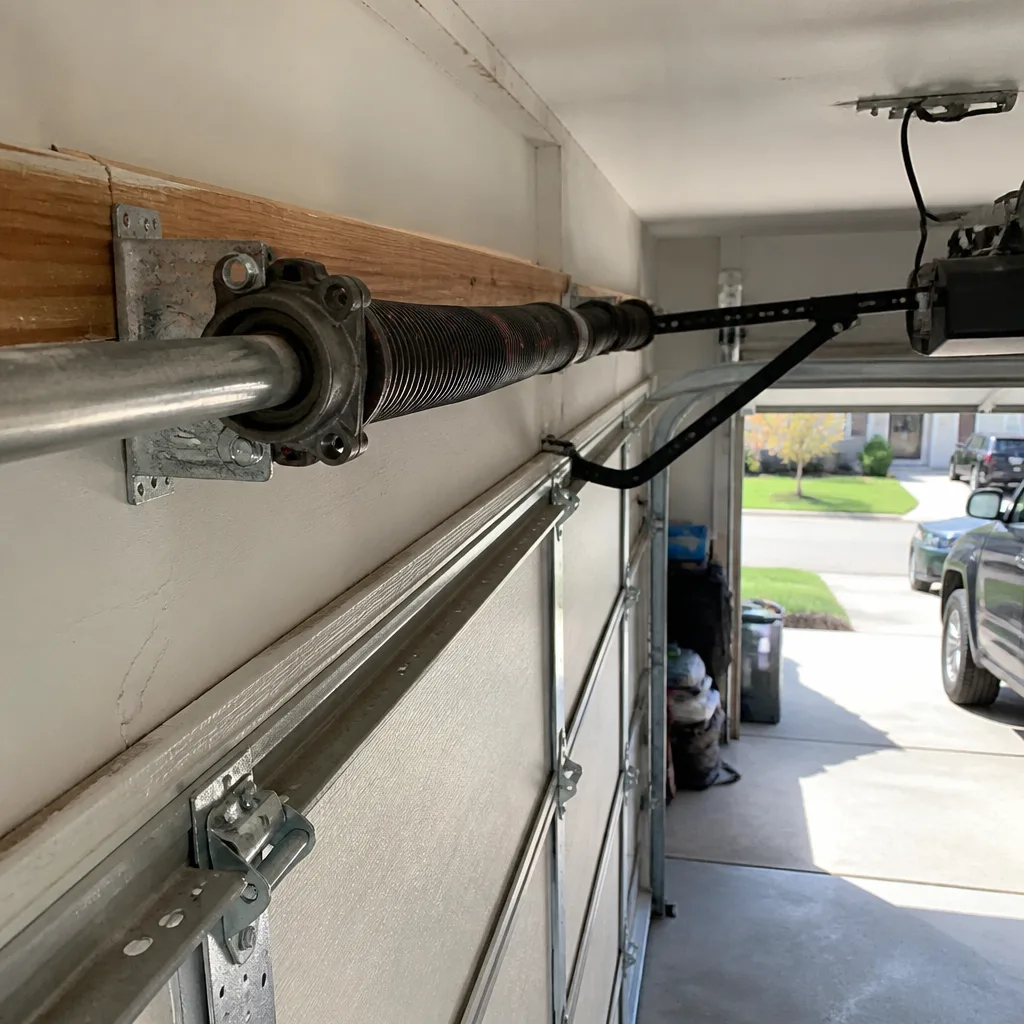 After
After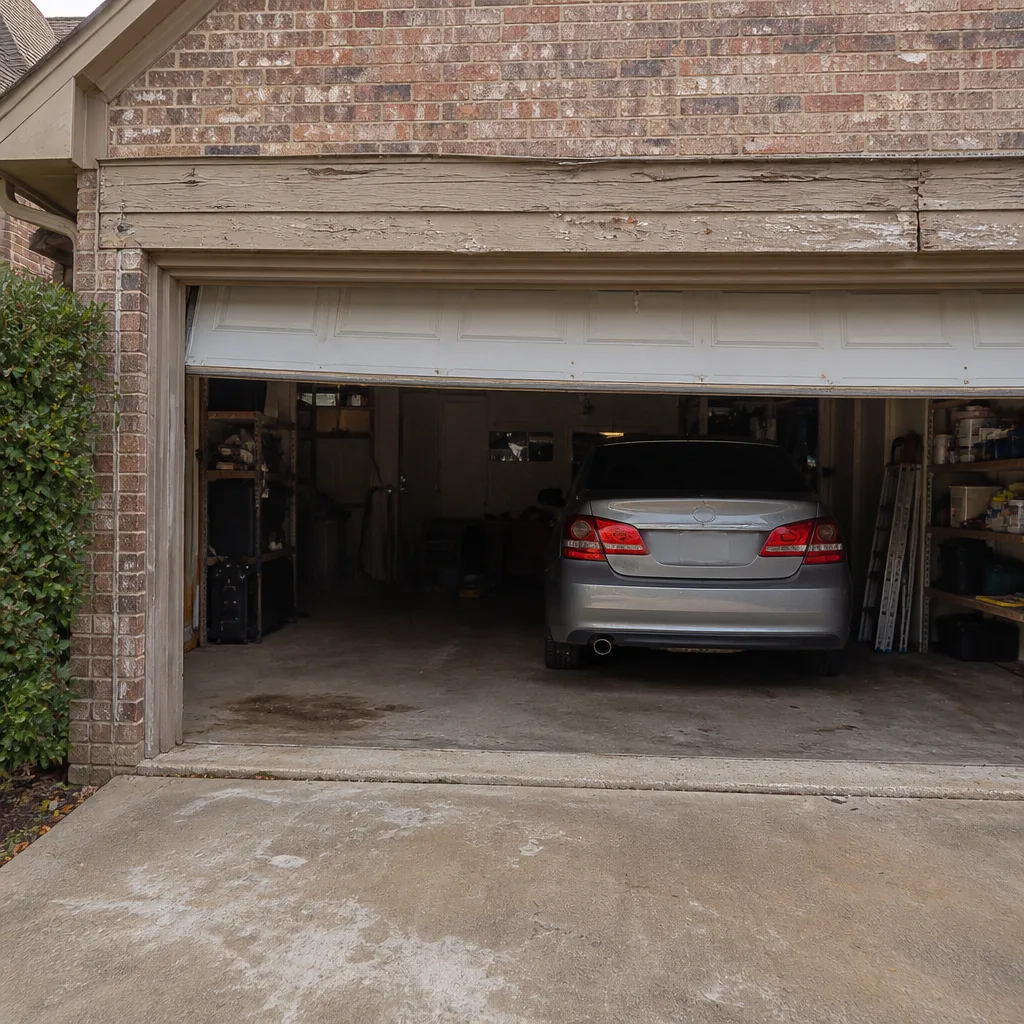 Before
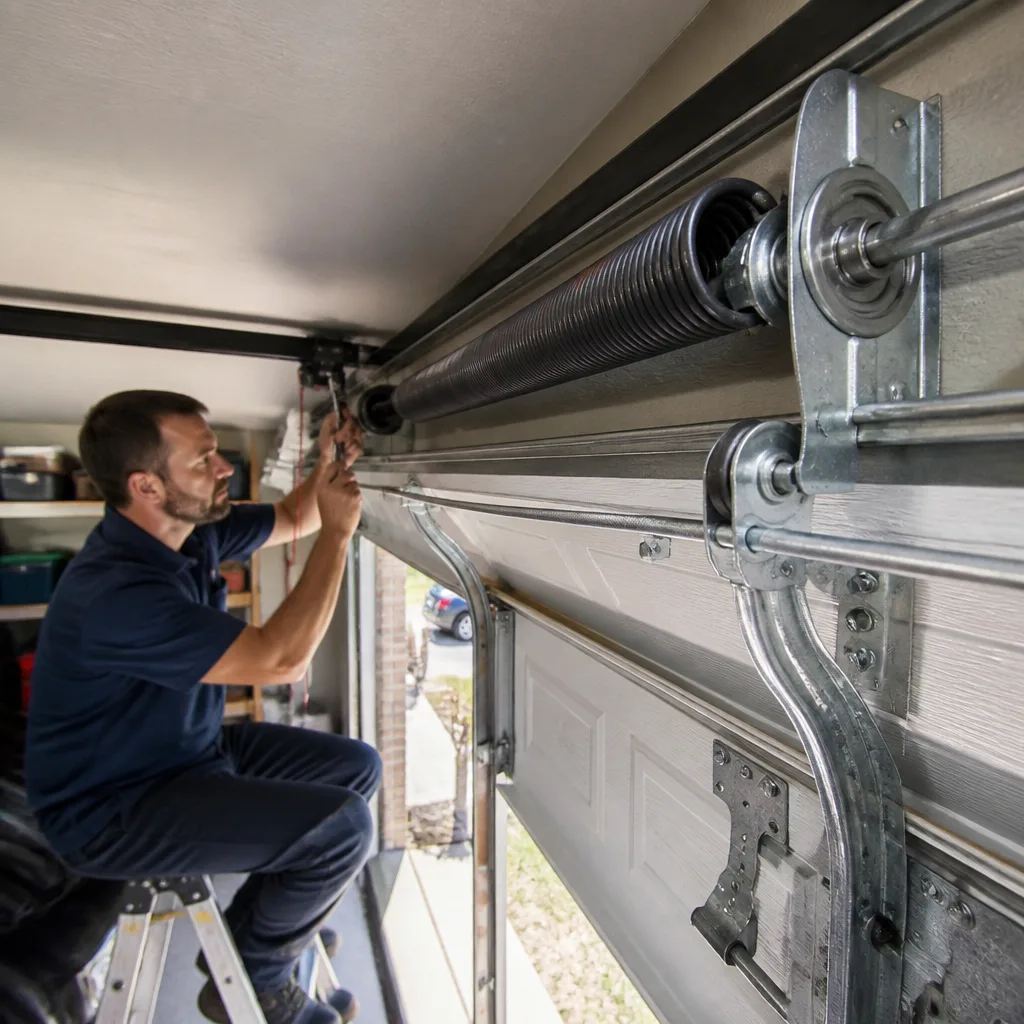 After
AfterThe Complete Guide to Garage Door in Allen
Allen sits on expansive clay soil that shifts enough each year to throw a perfectly installed door out of plumb - most national buying guides never mention it once. We’ve serviced homes in Twin Creeks where the track gap grew three-eighths of an inch in a single dry summer, and in Waterford where a door that closed fine in March rattled against the stop molding by August. This guide maps every decision a North Texas homeowner actually faces, from slab heave effects on track alignment to which panel styles pass Allen’s HOA review boards. You will learn how local soil, climate, and codes change what you buy, how you maintain it, and who you trust to install it.
Quick Answer
A garage door in Allen needs to withstand expansive clay soil movement, intense UV exposure, and summer thermal cycling that degrades standard hardware faster than national averages predict. Most homeowners here replace doors every 15-20 years, but proper steel gauge, local wind-load rating, and seasonal track adjustment can extend that by 5+ years. Expect to budget $1,200-$3,800 for a new steel door installed; see our Garage Door Cost Breakdown: The Allen Homeowner’s Reference for 2026 for how these numbers shift with specs and site conditions. Permits are required for new frame-out work but not for direct opener replacements on existing doors.
Table of Contents
- How Allen’s Expansive Clay Soil Affects Your Garage Door
- Climate, UV, and Hardware: What North Texas Heat Does to Your Door
- Allen HOA Design Standards: What Passes and What Gets Rejected
- R-Value Reality: Why Northern Recommendations Fail in Allen
- Permits, Codes, and Inspections in Allen
- Choosing the Right Door: Gauge, Style, and Brand
- Matching Your Opener to Allen Conditions
- A Maintenance Schedule Built for Allen
How Allen’s Expansive Clay Soil Affects Your Garage Door
Collin County’s black gumbo clay expands when wet and contracts when dry, creating vertical soil movement that engineers call slab heave. In Allen, this is not a foundation problem reserved for new construction. It is a constant, seasonal force that works on every garage slab, every year.
We see the results in three predictable patterns. First, track misalignment. The slab moves; the vertical track, bolted to the jamb, does not. Over months, the roller gap that started at a quarter inch grows to three-quarters, and the door starts binding at the knee or popping out of the track entirely. Second, header stress. As the slab drops in a dry spell, the header span effectively lengthens, and the torsion tube bears weight it was never engineered for. We’ve replaced springs in Bethany Lakes that failed in four years, not because of cycle count, but because of uneven load distribution caused by slab tilt. Third, seal failure. The bottom rubber, compressed against a slab that was level in April, gaps in October, letting in water, leaves, and field mice from the greenbelt corridors.
What compensates for this? Three specifications matter in Allen more than they would in, say, Houston or Austin:
- Heavy-gauge vertical track: 14-gauge or 12-gauge steel resists the racking forces that 16-gauge track bends under. The extra cost is $80-$150 per door and pays for itself in avoided service calls.
- Slotted jamb brackets: These allow minor vertical adjustment without unbolting the entire track. A technician can compensate for half an inch of slab movement in ten minutes, not two hours.
- Reinforced bottom fixtures: The bracket that holds the bottom roller takes the most stress during slab shift. Cast steel fixtures outlast stamped steel by a wide margin in this market.
In our experience, homeowners who install these three features during replacement cut their annual adjustment calls by more than half. The door still moves with the slab, but it does not fail because of it.
Climate, UV, and Hardware: What North Texas Heat Does to Your Door
Allen averages 18 days above 100 degrees each summer, and garage interiors routinely hit 120 degrees in July and August. That heat does not merely make the space uncomfortable. It fundamentally degrades components that national lifespan charts assume operate in milder conditions.
Here’s what we observe in the field. Torsion springs, rated for 10,000 cycles in standard testing, often fail at 7,000-8,000 cycles in Allen because heat accelerates metal fatigue. The grease on screw-drive openers thins and migrates, leaving dry contact points that wear the carriage prematurely. Plastic gears in budget openers soften and strip. Weatherstripping, especially the cheap PVC variety, hardens and cracks in 3-4 years instead of the advertised 8-10.
UV exposure on south- and west-facing doors is equally punishing. In StarCreek and Montgomery Farm, where lots are oriented to maximize backyard privacy, front-facing garage doors take direct afternoon sun for six hours daily. Factory paint on lower-end steel doors chalks and fades within 7 years. Window inserts yellow and become brittle. Wood composite doors, popular for their appearance, delaminate at the bottom where heat and humidity converge.
Our recommendations for Allen’s climate:
- Specify galvanized torsion springs with a powder-coated finish, not oil-tempered black springs. The coating blocks UV and moisture that accelerate corrosion.
- Choose a belt-drive or chain-drive opener over screw-drive for attached garages. The thermal cycling in an Allen garage is too severe for screw-drive lubrication to remain stable year-round. LiftMaster and Chamberlain both manufacture belt-drive units with DC motors that run cooler and quieter.
- Insist on EPDM rubber bottom seal, not PVC or vinyl. EPDM remains flexible to 40 below and 250 above, and it resists UV ozone cracking that destroys lesser materials in this market.
- Order a door with a baked-on polyester or fluoropolymer finish if the door faces south or west. Clopay’s Ultra-Grain and Amarr’s Designer Choice both hold color through 15 years of Texas sun in our observation.
The national average for garage door replacement is 17 years. In Allen, with standard components, we see functional life closer to 12-14 years. With the specifications above, homeowners routinely reach 20+ years before the door itself, not a single component, requires replacement.
Allen HOA Design Standards: What Passes and What Gets Rejected
Allen has over 80 active homeowners associations, and most enforce architectural control guidelines that specify acceptable garage door styles, colors, window configurations, and hardware finishes. Buying a door without reviewing these standards is a common and expensive mistake. We have been called to remove brand-new doors in Suncreek, The Village at Allen, and several phases of Twin Creeks because the homeowner’s selection violated covenant language they had never read.
Common restrictions we encounter:
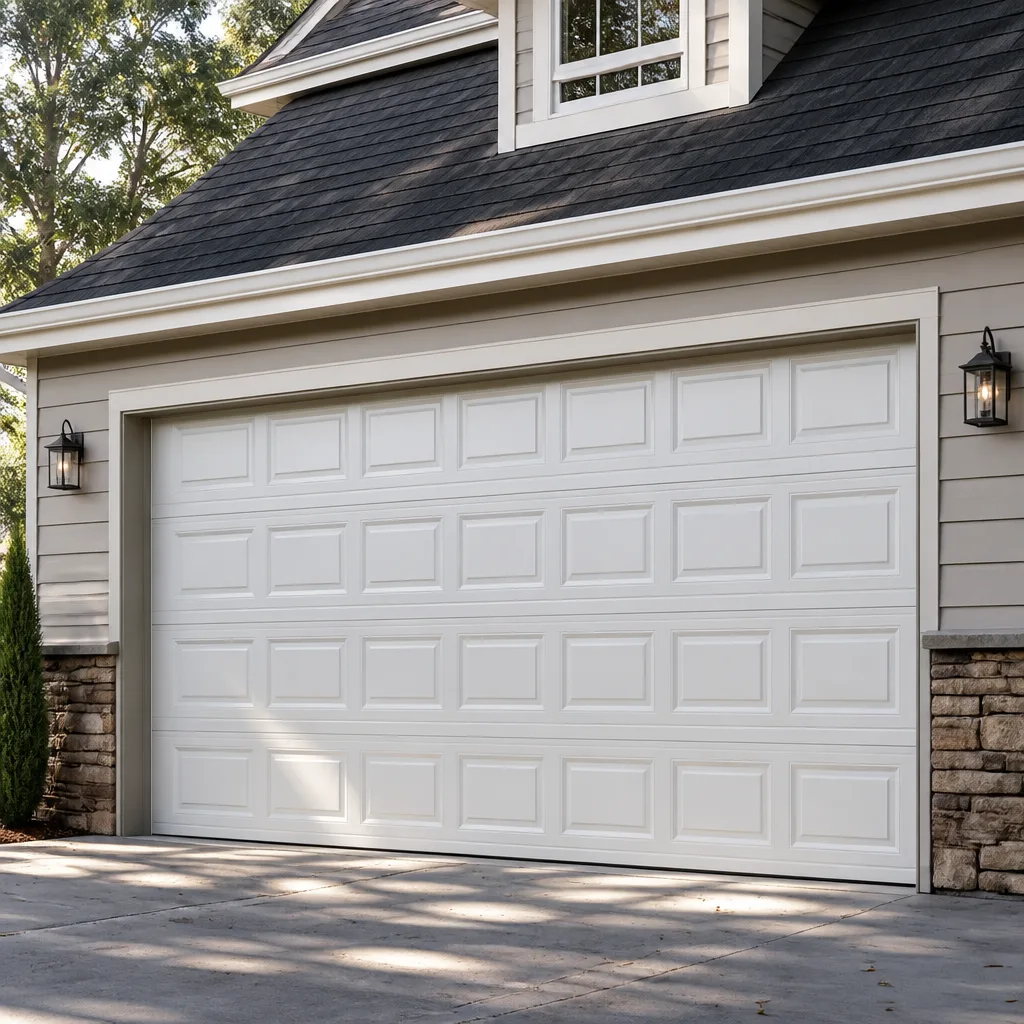
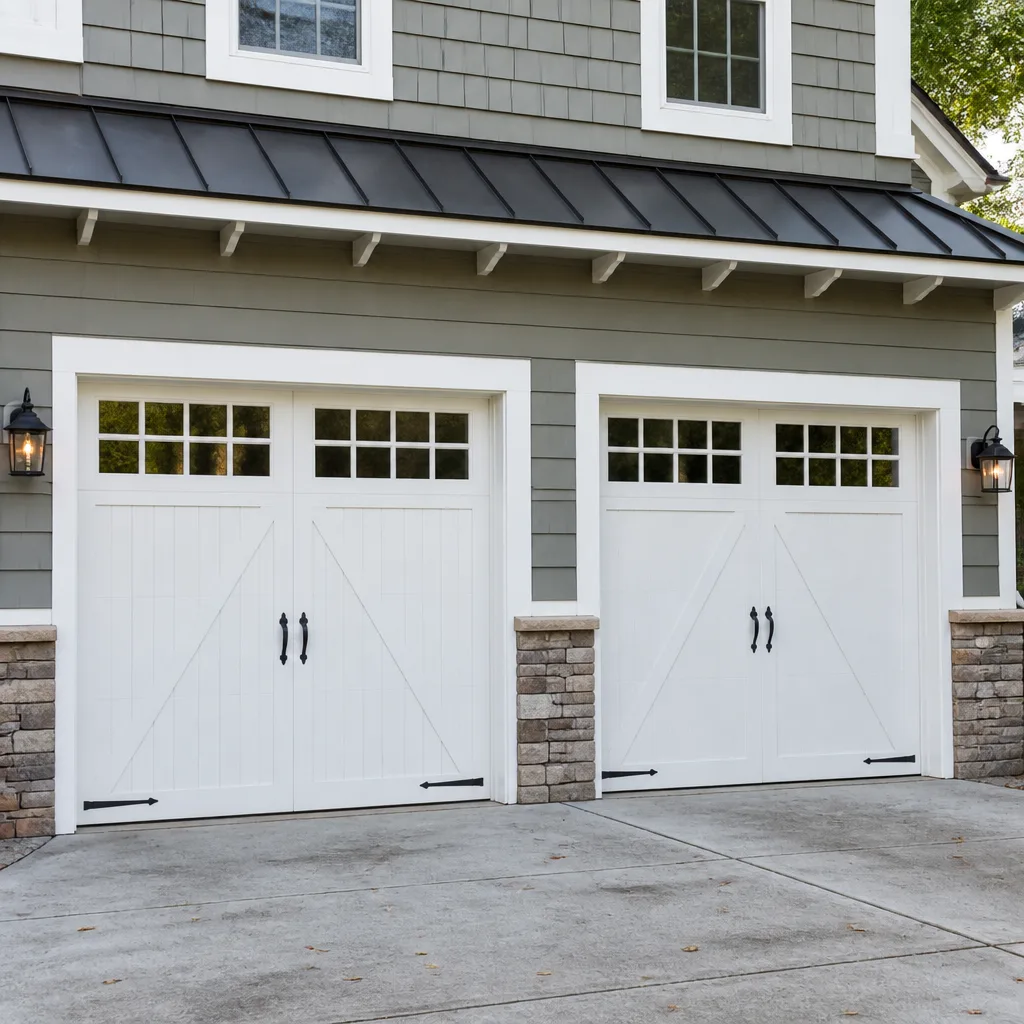
- Panel style: Many Allen HOAs mandate recessed panel or carriage house designs and explicitly prohibit flush or ribbed commercial panels. The language typically references “residential character” or “streetscape consistency.”
- Window placement: Top-section-only is standard; some HOAs ban windows entirely or restrict them to square or rectangular inserts, excluding sunburst or arch designs.
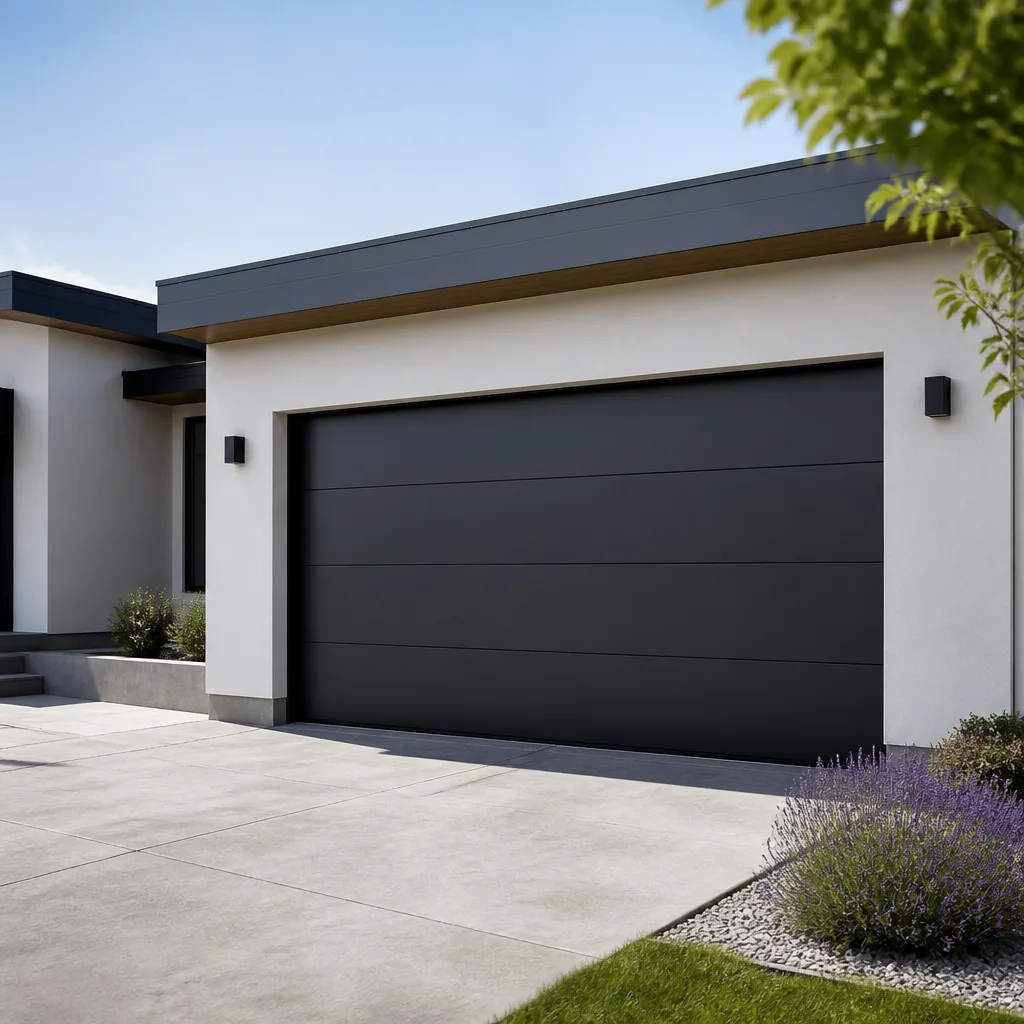
- Color palette: Earth tones predominate. Bright whites, bold reds, and black doors face scrutiny in neighborhoods with written color schedules. Some require ARC approval for any deviation from a pre-approved list of 8-12 colors.
- Hardware: Decorative strap hinges and handles are sometimes required for carriage house doors; other HOAs ban them as “faux historical” elements. The distinction matters when you are ordering.
The approval process varies. Some HOAs, like those managed by FirstService Residential in newer Allen developments, require pre-installation photographs and manufacturer cut sheets. Others operate on post-installation inspection with a 30-day correction notice. A few still rely on neighbor complaint triggers, which means a door can stand for two years before enforcement action.
Our practice: before quoting any replacement in an Allen HOA neighborhood, we ask for the architectural guidelines or contact the management company directly. The 20-minute phone call prevents a $2,000+ reorder. If you are uncertain, our installation team in Allen maintains a library of approved designs for 40+ local subdivisions and can confirm compliance before you commit.
R-Value Reality: Why Northern Recommendations Fail in Allen
Garage door R-value is marketed aggressively, with national retailers pushing R-16 and R-18 doors as “energy efficient” without climate context. For Allen, this is misleading in two directions.
First, the problem here is not heat loss. It is heat gain. A high-R door facing west in August still radiates stored heat into the garage for hours after sunset. The critical specification for Allen is not center-of-panel R-value but radiant barrier performance and air sealing. A well-sealed R-8 door with a reflective foil backing outperforms an R-16 door with gaps at the sides and top in every test we have run.
Second, attached garage insulation affects the house differently in North Texas than in Minnesota. In winter, an uninsulated garage in Allen loses negligible heat to 40-degree outdoor air. In summer, that same garage, if west-facing and uninsulated, acts as a thermal battery that burdens your air conditioning until midnight. The door’s R-value matters less than whether the garage itself is conditioned, whether the attic above is insulated, and whether the common wall with the house is sealed at the plate line.
Practical guidance for Allen homeowners:
- R-8 to R-12 is sufficient for most Allen applications. Higher R-values add cost and weight without proportional benefit in this climate.
- Prioritize polyurethane foam over polystyrene if you do upgrade. Polyurethane bonds to the steel skin, adding structural rigidity that resists the denting and oil-canning common in hail-prone Collin County. Polystyrene panels rattle and can delaminate.
- Specify a vinyl or thermal break bottom retainer to prevent thermal bridging at the slab contact point. This is where most heat transfer actually occurs, and it is invisible in R-value marketing.
- Consider an insulated door even for detached garages if you store temperature-sensitive items or use the space as a workshop. Allen’s summer heat degrades paint, adhesives, and electronics stored in uninsulated spaces.
The $200-$400 premium for a mid-range insulated door pays back in reduced HVAC load and stored-item protection. The $800+ premium for a super-high-R door rarely does, in our observation, unless the garage is actively conditioned year-round.
Permits, Codes, and Inspections in Allen
Allen Building Inspections operates under the 2021 International Residential Code with local amendments, and Garage Door Permits, Codes & Inspections in TX: What You Need to Know covers the three distinct permit categories that homeowners routinely confuse.
New door on existing frame: No permit required if the opening is not modified, the door is not fire-rated, and the work is purely replacement-in-kind. This covers 70% of our residential calls.
New frame-out or structural modification: Permit required. This includes widening an opening, converting a window to a door, or any work that touches the header, jack studs, or shear wall. Allen requires engineered drawings for header spans over 8 feet, and inspection is mandatory before drywall or siding closure.
Opener replacement: Generally no permit if mounted to an existing door. However, if the opener installation requires new electrical circuit work beyond a simple plug-in, Allen requires an electrical permit. Hardwired openers, increasingly common with battery-backup units, often trigger this requirement.
Wind-load rating is the code element most specific to North Texas. Collin County lies in a 120 mph wind zone per ASCE 7-16, and Allen enforces this for new construction and permitted replacements. A door rated for 90 mph, common in budget lines sold online, does not meet code. The rating must be documented on the door label and match the engineered plans. We have seen homeowners purchase $800 doors from national retailers that cannot pass Allen inspection.
Inspection scheduling in Allen is typically 24-48 hours for residential work, with same-day available for emergency re-inspections. The city does not require a contractor license for garage door work specifically, but general liability insurance and workers compensation are mandatory for permitted jobs. Mainspring carries both, and we pull permits directly for any job that requires them, with no markup on the city fee.
Choosing the Right Door: Gauge, Style, and Brand
The Allen market offers three material categories, each with honest tradeoffs that national guides gloss over.
Steel: Dominates for good reason. A 24-gauge or 25-gauge steel door with a woodgrain embossing withstands hail, resists denting from basketballs and bike handles, and requires no refinishing. The gauge matters: 27-gauge steel, common in builder-grade doors, dents from moderate hail and shows every impact. In Allen’s hail corridor, we do not install below 25-gauge on residential doors. Clopay’s Canyon Ridge and Amarr’s Classica both offer 24-gauge options with convincing carriage house profiles that satisfy most HOA requirements.
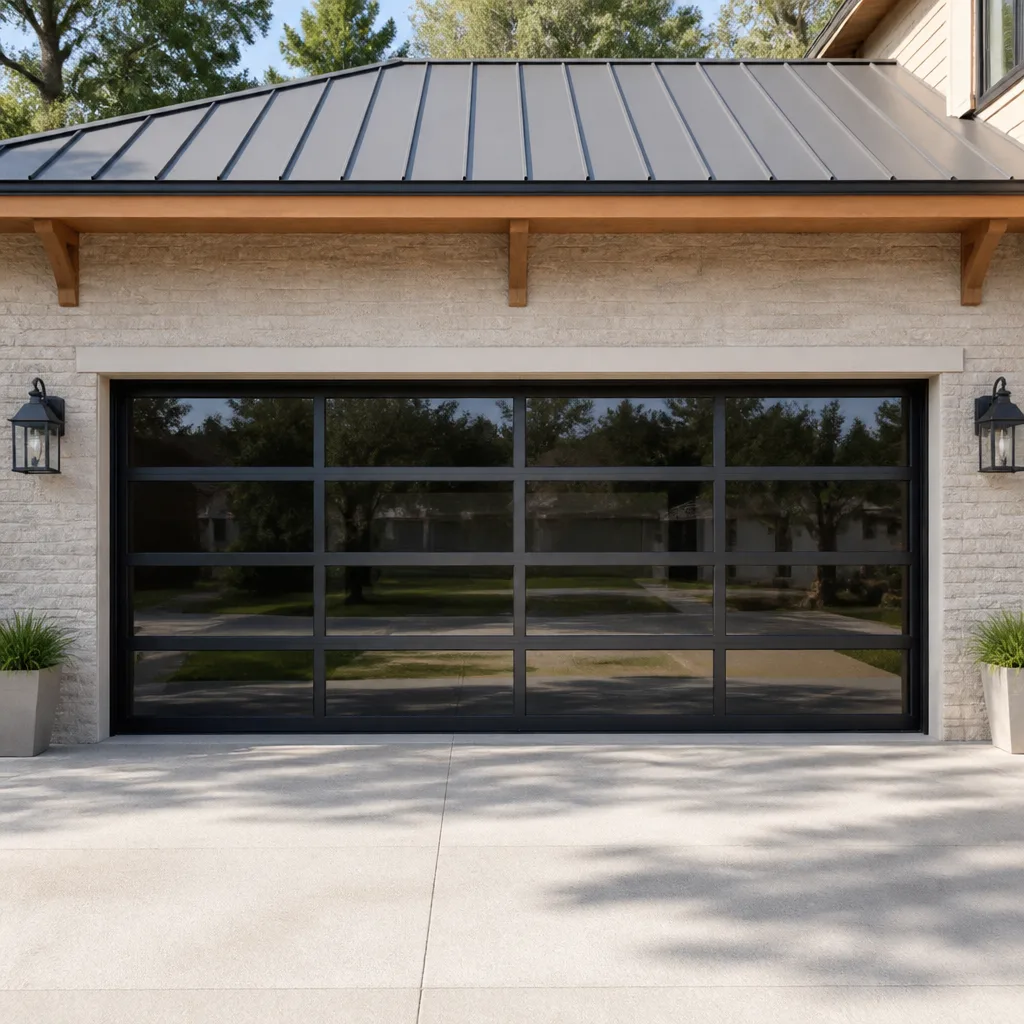
Aluminum and glass: Gaining popularity in modern and transitional architecture, particularly in newer Allen infill and custom builds. The frames are lightweight and corrosion-proof, but the glass panels conduct heat aggressively. A west-facing aluminum-and-glass door turns the garage into a greenhouse by 4 PM in July. If you choose this style, specify low-E glass with a solar heat gain coefficient below 0.40, and confirm your garage is independently cooled.
Wood and wood composite: Unmatched for appearance in traditional neighborhoods like The Hills of StarCreek or older custom homes near Cottonwood Creek. The maintenance burden is real: restaining every 3-4 years, seal replacement at the bottom due to splashback, and vigilance for termite activity. Real wood doors in Allen last 12-15 years with diligent care; neglected, they fail in 7. Composites extend this but delaminate at the bottom where heat and moisture converge.
Brand selection in Allen should prioritize local parts availability and technician familiarity. We are factory-familiar with all major brands, but our trucks stock parts for LiftMaster, Chamberlain, Genie, Clopay, and Amarr because these represent 85% of the Allen installed base. A less common brand means longer wait times when service is needed, and in our experience, homeowners value that predictability after a spring fails on a Saturday evening.
Window configuration deserves specific attention. In Allen, top-section windows with insulated glass add $180-$340 to a standard door. They transform a garage’s interior light but create a security consideration. Frosted or obscure glass prevents the visual inventory that tempts break-ins, particularly in neighborhoods with alley-access garages. Some homeowners specify impact-rated glass for tornado season; this adds 40% to the window cost but meets the peace-of-mind threshold for families with ground-floor bedrooms above or adjacent to the garage.
Matching Your Opener to Allen Conditions
The opener does not merely lift the door. In Allen’s climate, it is the component most vulnerable to thermal stress, power fluctuation, and the cumulative wear of high-cycle use in large homes with multiple drivers.
Drive type selection:
- Belt drive: Quietest, lowest maintenance, best for attached garages where bedroom walls share the garage ceiling. The reinforced rubber belt handles thermal cycling better than screw-drive lubrication. LiftMaster’s 87504-267 and Chamberlain’s B970 both include battery backup, now a practical necessity given Texas grid instability.
- Chain drive: Most economical, longest track record, slightly louder. Appropriate for detached garages or where cost is the primary driver. The chain requires annual lubrication with lithium grease, not WD-40, to prevent the grit accumulation common in Allen’s windy spring seasons.
- Screw drive: We no longer recommend these for Allen residential installation. The grease formulation that worked in moderate climates fails here; we have replaced too many carriages and motors that seized due to lubrication breakdown.
Horsepower matters more than marketing suggests. A 7-foot, 16×7 steel door in Allen, with insulation and windows, weighs 180-220 pounds. A half-horsepower opener strains on that load, particularly as springs weaken and the door becomes heavier to lift. We specify three-quarter horsepower as minimum for double doors, and one horsepower for solid wood or oversized custom doors. The motor runs cooler, lasts longer, and handles the occasional stuck roller or debris obstruction without burning out.
Smart connectivity is increasingly standard. MyQ-equipped openers allow remote monitoring, which matters for Allen homeowners who travel or own rental properties. The integration with Amazon Key and some home security systems is functional, though we caution that Wi-Fi connectivity in a metal garage, particularly with a metal door, can be unreliable without a range extender.
Battery backup is not merely convenience in Texas. Since the 2021 winter storm and ongoing grid stress, we have installed more battery-backup openers in two years than in the previous decade. The incremental cost is $120-$180, and it ensures egress during power failure without manual release manipulation, which many older homeowners find difficult.
Our opener service in Allen includes load testing, force-limit adjustment, and safety reversal verification on every call. These settings drift with temperature and wear, and an improperly set opener is a liability issue waiting to happen.
A Maintenance Schedule Built for Allen
National maintenance checklists assume moderate climates and stable foundations. Allen requires a more aggressive schedule, tuned to our soil, heat, and storm patterns.
Monthly (homeowner):
- Visual track inspection. Look for roller gap changes, bolt looseness, or debris in the lower track. Allen’s windborne pollen and cottonwood fluff accumulate rapidly in spring.
- Balance test. Disconnect the opener and lift the door manually to waist height. It should stay, not rise or fall. If it moves, the spring tension is drifting, which happens faster here due to thermal cycling.
- Reversal test. Place a 2×4 flat on the floor; the door should reverse on contact. Federal law requires this function, but Allen’s humidity and dust can foul the sensors.
Quarterly (homeowner or technician):
- Lubricate rollers, hinges, and bearings with silicone or lithium spray. Avoid grease on nylon rollers; it attracts grit that acts as grinding compound.
- Tighten all track bolts and lag screws. The vibration of daily operation loosens them, and slab movement accelerates the process.
- Inspect weatherstripping for UV cracking and seal contact. Replace EPDM when it loses compression set, typically 5-7 years in Allen.
Annually (professional):
- Spring tension measurement and adjustment. Torsion springs lose approximately 5% of their force annually in high-heat environments; in Allen, we see 7-10%.
- Cable inspection for fraying and corrosion. The humidity spikes before summer storms create flash corrosion on galvanized cables.
- Opener force and limit settings verified with a calibrated load cell, not guesswork.
- Full hardware inspection: bottom fixtures, flag brackets, bearing plates, and drums. These are the components that fail catastrophically when slab movement stresses the system.
Our repair team in Allen offers the $89 Seasonal Tune-Up, which covers the annual professional items above. For homeowners who have been in their house fifteen years or more, we recommend this every six months, not annually. The cost of prevention is predictable; the cost of a failed spring or derailed door, often at the worst possible moment, is not.
Common Mistakes to Avoid
- Buying for R-value alone without radiant barrier consideration. A high-R door without reflective facing or proper air sealing underperforms a mid-R door with both, in Allen’s heat-gain climate.
- Ignoring HOA guidelines until after installation. The ARC violation process in Allen can require complete removal at the homeowner’s expense, not merely a fine.
- Choosing screw-drive openers for attached garages. The noise and thermal degradation make this a poor fit for Allen’s climate and typical lot density.
- Installing 27-gauge steel in hail country. Collin County sees 1.5-inch hail every 2-3 years on average; light-gauge doors require panel replacement after events that heavier gauge survives dented but functional.
- DIY spring replacement. Torsion springs store lethal energy. We have responded to injuries in Allen neighborhoods where homeowners attempted this with inadequate tools. The savings are not worth the risk.
- Neglecting the slab-seal interface. A gap at the bottom admits more heat, humidity, and pests than all other leakage paths combined, yet homeowners often replace the door while reusing a hardened, UV-damaged seal.
- Assuming all permits are the contractor’s responsibility. In Allen, the homeowner is ultimately liable for unpermitted work. Verify permit status in writing before final payment.
When to Call a Professional
Call when the door makes noise it did not make last month, when it reverses for no visible reason, when gaps appear at the sides or bottom, or when the opener strains visibly on a door that used to rise easily. These are early warnings of problems that become expensive when ignored. For broken springs, detached cables, or doors off-track, do not attempt operation; the stored energy in the system can cause serious injury. If you are weighing a fix yourself, read DIY vs Professional Garage Door: The Allen Homeowner’s Decision Guide first. Mainspring Garage Door Co. offers free estimates in Allen - call (214) 692-2338. We answer live, 24/7, and most repairs are completed in a single visit because our trucks carry the parts that Allen doors actually need.
Frequently Asked Questions
A new steel garage door installed in Allen typically ranges from $1,200 for a basic 16×7 uninsulated single-layer door to $3,800 for a premium insulated carriage house design with windows and decorative hardware. Wood doors start around $2,800 and can exceed $5,000 for custom sizing. The price is quoted and agreed before any work begins, with no surprises on the bill. Call (214) 692-2338 for an exact quote - estimates are free.
No permit is required for a direct replacement on an existing frame, which covers most residential jobs. A permit is required for new frame-out work, structural modifications, or any electrical circuit changes beyond a simple plug-in opener installation. Allen Building Inspections enforces the 120 mph wind-load rating for all new installations. We pull permits directly when required, with no markup on the city fee.
With standard components in Allen’s climate and soil conditions, expect 12-14 years before major replacement is needed. With heavy-gauge steel, galvanized springs, EPDM seals, and proper maintenance, 20+ years is achievable. The national average of 17 years assumes moderate climates and stable foundations; Allen’s expansive clay and thermal cycling shorten that for unprepared installations. For more guides & resources tuned to local conditions, see our blog.
No. Torsion springs store enough torque to cause serious injury or death if mishandled. The winding cones, set screws, and winding bars require specific tools and training. We have treated injuries in Allen where homeowners attempted this with makeshift tools. The cost of professional replacement, typically $180-$340 including the 90-Day Done Right Promise, is not worth the risk.
LiftMaster and Chamberlain lead in opener reliability for North Texas conditions, particularly their belt-drive models with battery backup. For doors, Clopay and Amarr offer the gauge options, finish durability, and parts availability that matter for long-term serviceability in this market. We stock parts for all four brands on our trucks, so most service calls require no waiting.
No. Mainspring states the flat price before any work begins. If we arrive and find conditions that change the scope, we explain the difference and obtain your approval before proceeding. There are no surprises on the bill, and no pressure to authorize work you did not request. This is the square deal we have offered for 42 years.
The Bottom Line
A garage door in Allen is not a generic purchase. The expansive clay soil beneath your slab, the UV intensity on your driveway, and the design standards of your neighborhood all change what you should buy, how you should maintain it, and who you should trust to install it. The homeowners who get 20 years from a door are the ones who accounted for these local conditions upfront: heavy-gauge steel, climate-appropriate hardware, proper permits, and a maintenance rhythm tuned to North Texas. Those who treat it as a commodity transaction often replace hardware twice and still end up with a door that rattles, leaks, and fails before its time. The difference is not luck. It is information applied with patience.
Written by Carl Dutton, Owner at Mainspring Garage Door Co., serving Allen since 2016.