
Last updated September 10, 2026
Full 25-point door and opener safety check with every visit - springs, cables, rollers, tracks, and your LiftMaster or Chamberlain opener included
You get a price before we start. It does not change when the truck arrives.
 Before
 After
After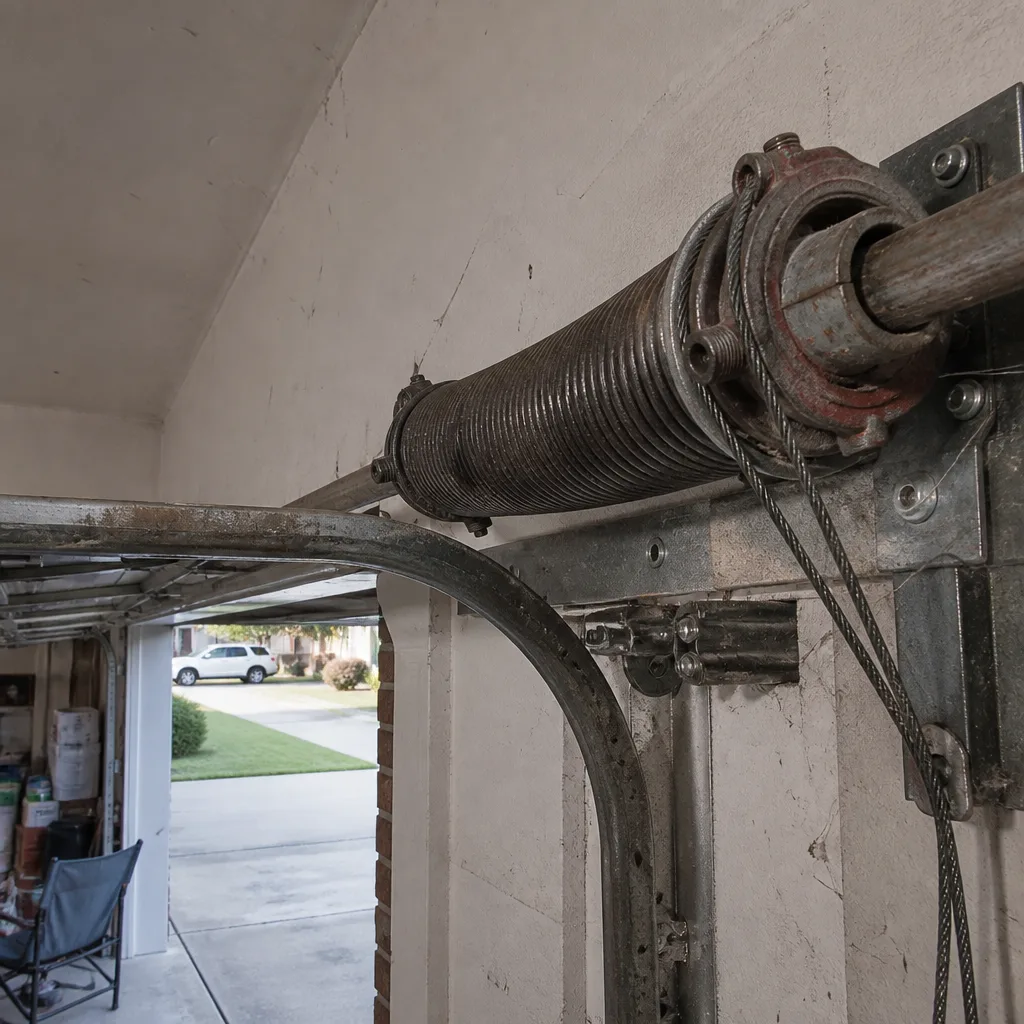 Before
 After
After Before
 After
AfterGarage Door Warning Signs: A Allen Homeowner’s Reference Guide
Most Allen homeowners will spend six months cleaning safety sensors that are not actually dirty. In our 42 years serving Collin County, we’ve seen the same story repeat: a door that reverses before closing gets blamed on photo-eyes, when the real culprit is heat-expanded track that throws the door’s geometry off by a quarter-inch. The homeowner buys new sensors, adjusts them for hours, and never fixes the problem. This guide will teach you to read your garage door like a technician reads it - ranking every warning sign by real urgency, separating foundation issues from mechanical ones, and knowing when to stop using the door entirely. For a broader look at maintenance and repair, see our Complete Guide to Garage Door in Allen.
Quick Answer
Garage door warning signs fall into three urgency levels: stop using the door immediately for broken springs, snapped cables, or doors off-track; schedule service within a week for slow response, uneven travel, or new grinding noises; monitor and log intermittent reversals, remote delays, or cosmetic panel damage. In Allen’s climate, heat expansion causes more false alarms than actual part failures - knowing which is which saves you from unnecessary repairs and dangerous delays alike. Our Seasonal Garage Door Care for Allen: Year-Round Homeowner’s Guide explains how to stay ahead of these climate-driven issues.
Table of Contents
- Tier One: Stop Using the Door Now
- Tier Two: Schedule Service Within a Week
- Tier Three: Monitor and Log
- How Allen’s Heat Creates False Warning Signs
- The Clay-Soil Sag Test: Foundation vs. Mechanical Problems
- When the Opener Complains But the Door Is the Problem
- Torsion Spring Stress vs. Worn Roller: Learning the Sound Difference
- Common Mistakes to Avoid
- When to Call a Professional
- Frequently Asked Questions
- The Bottom Line
Tier One: Stop Using the Door Now
These three conditions present genuine injury risk. Do not operate the door manually or with the opener. Unplug the opener, lock the door if possible, and call for service.
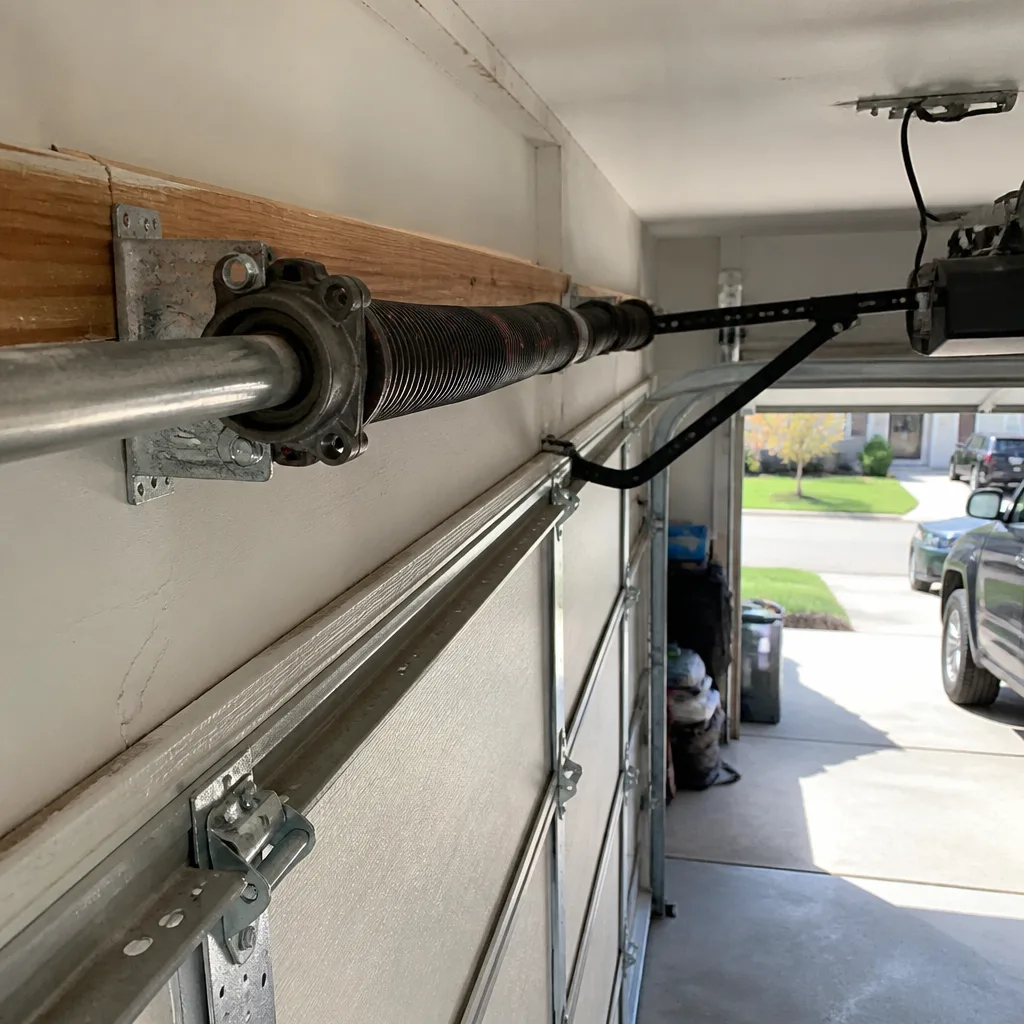
Broken Torsion Spring
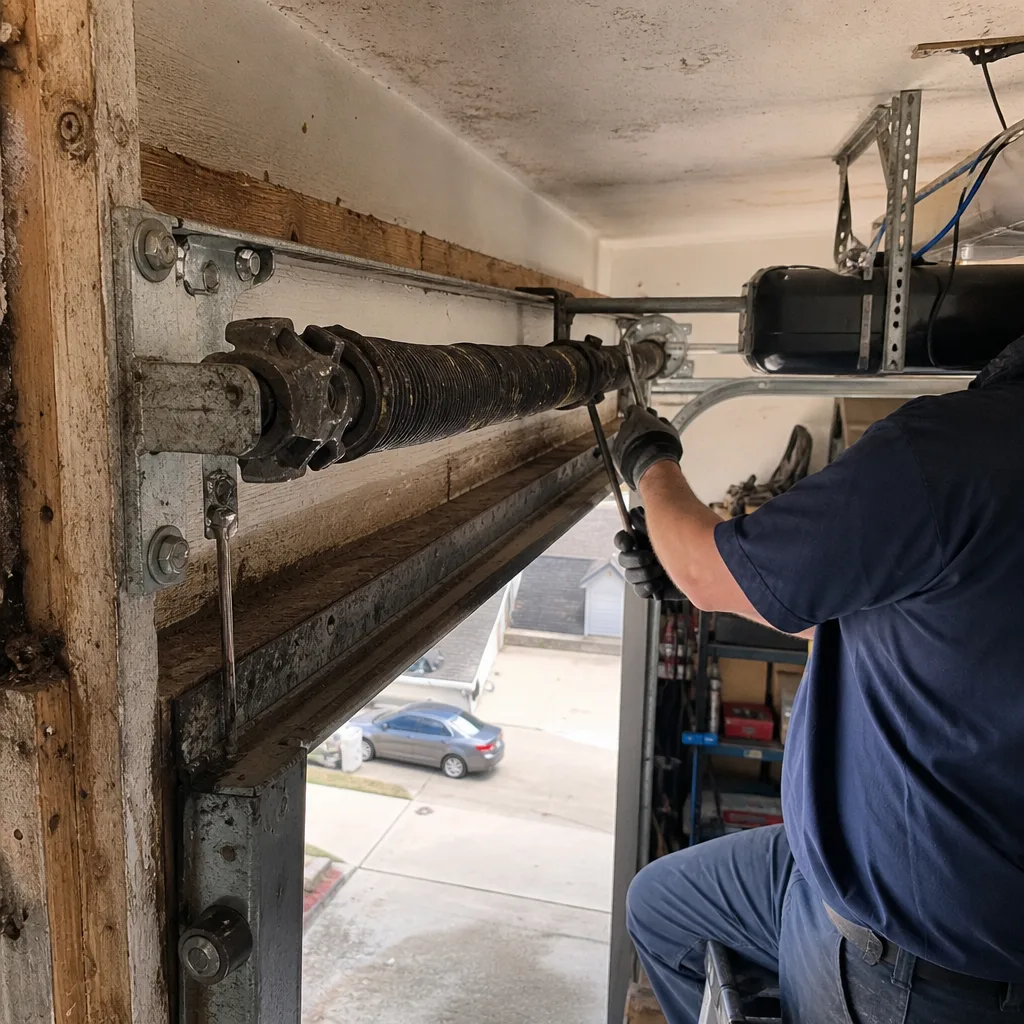
A torsion spring carries the full weight of your garage door - typically 150 to 400 pounds depending on size and construction. When it breaks, you will hear a loud bang, sometimes mistaken for a car backfiring or a transformer popping. The door will feel impossibly heavy if you try to lift it manually, or it may slam shut if it was open when the spring failed.
Why this is dangerous: The opener is not designed to lift a door without spring assistance. Running the opener with a broken spring strains the motor gear, strips the drive mechanism, and can pull the door off-track. More critically, a door with one broken spring in a dual-spring system may still move, but it travels unevenly and can bind catastrophically.
In Allen’s newer subdivisions like Twin Creeks and Waterford Parks, we see premature torsion spring failure in homes built 2015-2020. The springs installed by tract builders were often rated for 10,000 cycles at standard load, but the 8-foot ceilings and heavier insulated doors common in those neighborhoods cycle the springs faster than rated. We’ve replaced springs in Waterford Parks homes at six years that should have lasted twelve.
What to check: Look above the door at the spring coil. A gap of two inches or more in the coil means a break. Do not touch the spring. The tension stored in the winding cone can release without warning.
Snapped or Frayed Lift Cable
Lift cables run from the bottom corners of the door to the drum at each end of the torsion tube. When a cable frays or snaps, the door hangs crooked in the opening. One corner drops while the other stays supported.
Why this is dangerous: A door hanging on a single cable can twist off the track. The unsupported corner may drop suddenly. If someone is standing near that corner, the door can cause serious injury. We’ve responded to emergency calls in Allen’s older neighborhoods - Bethany Lakes, Cottonwood Crossing - where homeowners tried to “even out” a crooked door by running the opener repeatedly, which only jammed the door further into the track.
Cable fraying accelerates in North Texas humidity swings. The cable strands corrode microscopically, then the daily flexing of operation breaks them one by one. By the time you see three or more broken strands, the cable is already below safe working load.
Door Off-Track or Out of the Horizontal Track
You’ll see rollers lifted out of the vertical track, or the door leaning visibly in the opening. Sometimes the door still moves, scraping metal against metal.
Why this is dangerous: The track system is the only thing keeping a 200-pound door from falling. Once rollers leave the track, the door’s weight shifts unpredictably. A door that looks “just a little crooked” can drop its entire weight if the remaining rollers fail. Do not attempt to guide it back in by hand.
In Allen, we see off-track doors most often after impact - a teenager backing into the door, or a basketball hitting the bottom section. But we also see them after foundation movement shifts the track alignment, which brings us to the clay-soil test later in this guide.
Tier Two: Schedule Service Within a Week
These conditions will not cause sudden injury, but they indicate wear that progresses to failure. Address them within five to seven days to avoid escalation to Tier One.
Slow or Straining Opener Response
The door still opens and closes, but the opener labors. You hear the motor running longer than before, or the chain/belt seems to pull with visible effort. The door may pause mid-travel and resume.
This is not “the opener getting old” in most cases. It is the door hardware demanding more force than it should. Causes include:
- Dry or gummed rollers creating friction in the track
- Torsion springs losing tension and requiring more motor effort
- Bent track sections from previous impact
- Worn bearings in the end plates or center bracket
The opener is a control device, not a power lifter. A properly balanced door should move with roughly ten pounds of manual force. When the door demands more, the opener’s internal gear set absorbs the strain. In our experience across Allen, a straining opener will strip its main gear within two to four weeks of first showing symptoms. The gear replacement is $180-$340. Fixing the underlying door problem when you first notice the strain prevents the secondary damage.
Uneven Door Travel or Visible Gap at One Corner
The door reaches the floor but one corner sits a half-inch high. Or the door travels with a visible wobble, one side leading the other by a noticeable margin.
This indicates unequal spring tension, a binding roller, or cable length that has shifted on the drum. Left unaddressed, the uneven load concentrates stress on the door sections. Steel doors will eventually crack at the hinge points. Wood doors warp. The problem also strains the opener rail, which is designed for straight-line pull, not diagonal force.
In Allen’s StarCreek and Montgomery Farm estates, where many homeowners have upgraded to carriage-house style doors with decorative hardware, the added weight of those overlays makes uneven travel progress faster than on lighter doors. We’ve replaced bottom sections on 8-year-old Amarr Classica doors that would have lasted twenty years with balanced operation.
New Grinding, Squealing, or Popping Sounds
Any sound that begins suddenly and persists is worth attention. The specific sound indicates the specific problem:
- Grinding: Metal roller bearings failing, or track deformation causing roller slide instead of roll
- Squealing: Dry rollers or dry opener rail needing lubrication - but also early bearing failure in the opener head
- Popping or clicking: Door section hinges working loose, or a roller popping in and out of a damaged track section
A note on lubrication: silicone-based spray on rollers and hinges will quiet squealing temporarily. But if the sound returns within two weeks, the underlying wear is advancing. Grinding never responds to lubrication - the bearing race is already damaged.
Intermittent Remote or Wall Button Response
The door responds to the remote sometimes but not others. The wall button works consistently. This pattern usually indicates a failing logic board in the opener head, radio interference from LED bulbs installed in the opener housing, or degraded remote battery contacts.
Less commonly, it indicates a door that is binding at a specific point in travel and triggering the opener’s force safety reverse. The opener cuts power before completing the command, which looks like a remote problem but is actually a door problem. We’ll cover how to distinguish these in the opener-vs-door section.
Tier Three: Monitor and Log
These conditions are not emergencies, but they provide early warning of developing issues. Log the date and behavior. Photograph anything visible. This documentation helps your technician diagnose faster and protects you if a warranty issue develops.
Cosmetic Panel Damage
Dents, scratches, and surface rust on steel doors do not affect operation immediately. But they indicate points where the door’s protective coating has failed. In Allen’s climate, with summer humidity spikes and occasional hail, rust progresses from surface to perforation in 18-36 months once it starts.
Log the location and size. Photograph with a coin or ruler for scale. If the damage is on a lower panel where water splash collects, prioritize monitoring. If rust appears at a hinge point, schedule inspection - the hinge bolt hole is a stress concentrator, and corrosion there accelerates metal fatigue.
Fading or Inconsistent LED on Safety Sensors
Most sensor pairs show a steady LED when aligned and unobstructed. If one LED flickers occasionally, or seems dimmer than the other, note the conditions. Does it happen at a specific time of day? After rain? When the sun angle hits the sensor directly?
In Allen, we see more sun-induced sensor confusion than actual sensor failure. South and west-facing garage doors get direct afternoon sun that can blind the receiver. The sensor is working; it is simply overwhelmed by ambient infrared. A hood or shade block fixes this for under $20. But if the LED fades consistently regardless of sun angle, the emitter may be degrading.
Weather Seal Gaps or Hardening
The rubber seal at the door bottom should flex and conform to the floor. When it hardens, cracks, or leaves visible gaps, conditioned air escapes and pests enter. This is not an operational emergency, but it indicates the seal material has aged past effectiveness.
Allen homes in older neighborhoods - Ridgeview Park, Forest Glen - often still have original PVC seals installed in the 1990s. These become brittle and actually crack in sections. Modern EPDM rubber seals last longer and maintain flexibility in temperature swings. Replacement is straightforward and prevents the larger problem of water intrusion during our spring storm season.
Remote Range Decreasing Gradually
You used to open the door from the street; now you need to be in the driveway. This progression usually indicates battery degradation, but it can also signal the opener’s radio board losing transmit power. Log the range monthly. A sudden drop suggests interference from a new source - a neighbor’s LED floodlight, a new WiFi extender on the same frequency band. Gradual decline suggests hardware aging.
How Allen’s Heat Creates False Warning Signs
North Texas summer temperatures routinely expose garage door components to 120°F or higher in unventilated garages. This heat changes material behavior in ways that mimic part failure.
The Sensor Reversal That Is Not a Sensor Problem
When a garage door reverses immediately before reaching the floor, the standard diagnosis is misaligned or dirty safety sensors. But in Allen, from June through September, we see this symptom caused by heat-expanded track at least as often as by actual sensor issues.
Steel track expands approximately 0.0000063 inches per inch per degree Fahrenheit. A 16-foot-wide door has roughly 192 inches of total track length. A 60-degree temperature rise from morning to afternoon peak expands that track by 0.073 inches - nearly a sixteenth of an inch. The vertical track moves outward, the horizontal track shifts position, and the door’s travel geometry changes enough to trigger the opener’s force sensitivity.
The opener interprets the increased resistance as an obstruction and reverses. The sensors are clean, aligned, and functioning. The track has simply moved.
How to distinguish track expansion from sensor failure:
- Note the time of day the reversal occurs. Track expansion problems happen in afternoon heat, rarely in morning cool.
- Check if the door closes normally after sunset. If it does, expansion is the likely cause.
- Inspect the track mounting brackets. Loose brackets allow more movement than tight ones. A bracket that has pulled away from the wall by even 1/8 inch amplifies the thermal expansion effect.
- Clean the sensors anyway - it costs nothing and rules out the obvious. If cleaning does not change the pattern, suspect track.
The fix is not sensor replacement. It is track realignment with proper clearance for thermal movement, and sometimes upgrading to slotted bracket holes that allow expansion without binding. We’ve performed this adjustment on dozens of Allen homes, particularly in neighborhoods built 2005-2015 where builder-grade track hardware was minimally secured.
Opener Thermal Shutdown
Modern openers have internal thermal protection. After repeated cycles in a hot garage, the motor shuts down until it cools. The homeowner presses the button, hears nothing, and assumes opener failure. Two hours later, it works again.
This is normal protective behavior, but it indicates the opener is operating near its thermal limit. In garages with west-facing doors and poor ventilation, we recommend adding a louvered vent or small exhaust fan. For homes in Allen’s Twin Creeks and Glendover Park where garage ceilings back to attic space, we also check whether attic ventilation is pulling superheated air down through the garage ceiling.
The Clay-Soil Sag Test: Foundation vs. Mechanical Problems
Collin County sits on expansive clay soils that swell when wet and shrink when dry. This movement shifts foundations, and foundation movement affects garage door alignment. A door that sticks, binds, or shows uneven travel may have a mechanical problem, a foundation problem, or both. Knowing which is which prevents spending money on door repairs that will not fix the symptom. Browse our more guides & resources for additional homeowner tips.
The sag test:
- Close the door fully.
- Measure the gap between the door bottom and the floor at the left corner, center, and right corner. Record all three.
- Repeat the measurement in early morning, when soil moisture is highest, and late afternoon, when evaporation has peaked.
- Compare the measurements.
If the gap pattern changes by more than 3/16 inch between morning and afternoon, foundation movement is active and contributing to the door problem. The door hardware may also need attention, but realigning the door without addressing the foundation cycle means repeating the alignment in six months.
If the gap pattern is consistent across time but the door still binds, the problem is mechanical - track, rollers, or spring tension.
In Allen’s older east-side neighborhoods near Bethany Road, we see more foundation-related door problems than in newer west-side construction. The soils there are more expansive, and the mature trees create uneven moisture extraction. We’ve worked with foundation repair companies on several jobs where the door could not be properly aligned until piers were installed.
A specific local note: Allen’s 2021 update to the residential building code requires garage door tracks to be anchored with expansion-rated fasteners in new construction, specifically to accommodate clay-soil movement. Homes built before this standard may have rigid anchors that crack or pull loose as the wall moves. If you see cracked drywall around the track mounting points, this is likely the cause.
When the Opener Complains But the Door Is the Problem
Homeowners replace openers that are not actually failing. The new opener performs exactly like the old one, because the door was the problem all along. This misdiagnosis costs $400-$800 unnecessarily.
The opener is the most visible component, so it gets blamed first. But the opener only moves what the door hardware allows. These symptoms point to door problems disguised as opener problems:
- Door starts down then reverses: Usually force sensitivity triggered by binding door, not sensor issue
- Opener light flashes but door does not move: Many openers flash the light to indicate force overload or travel limit error - both can be caused by door binding
- Opener runs but door barely moves: Stripped opener gear from prolonged overload, or the door is simply too heavy due to spring failure
- Door opens but will not close with remote: Could be sensor, but also can be the door binding in down-travel and triggering force reverse
The diagnostic sequence we use:
- Disconnect the opener from the door using the emergency release handle.
- Operate the door manually through full travel. It should move smoothly with roughly ten pounds of force, stay at any position without drifting, and not bind at any point.
- If manual operation reveals problems, the door needs service before any opener diagnosis is meaningful.
- If the door operates smoothly manually, then test the opener without load. The trolley should travel full distance smoothly. If it does not, the opener has an internal problem.
This ten-minute test prevents wrong repairs. We’ve performed it hundreds of times in Allen homes. In maybe thirty percent of cases where the homeowner was quoted a new opener, the actual problem was a $220 spring adjustment or roller replacement.
A specific brand note: Craftsman openers sold through Sears and later Lowe’s in the 2000-2015 period have a known issue with their RPM sensor boards that produces symptoms identical to door binding. The door operates fine manually, but the opener reverses or stalls. If you have a Craftsman unit of that era and the manual test is clean, the RPM sensor is worth checking before replacing the entire opener. We carry the replacement boards and can test on-site.
Torsion Spring Stress vs. Worn Roller: Learning the Sound Difference
Both failing springs and failing rollers produce noise during door travel. Conflating them leads to wrong repairs and missed safety warnings.
Torsion spring under excess tension or nearing failure:
The sound is a deep, resonant creak or groan, almost like a ship’s hull under stress. It happens at the same point in every cycle, usually when the door is one-third to halfway open - the point of maximum spring torque. The sound comes from above the door, centered on the spring tube. You may also see the spring coil gapping slightly between turns when the door is closed, indicating the spring has taken a permanent set and lost some of its original tension.
This sound means the spring is working harder than designed, either because it is fatigued and has lost tension, or because the door weight has changed (added insulation, water damage to wood door). The spring is not yet broken, but it is approaching failure. Schedule replacement within days, not weeks.
Worn roller:
The sound is a higher-pitched squeal, rattle, or clicking that moves along the track as the door travels. It may vary in intensity or disappear at certain positions. The sound travels - it seems to come from the left side, then the right, following the door’s movement. A severely worn steel roller produces a grinding crunch. A nylon roller with failed bearings produces a rapid clicking as the roller slides instead of turning.
Roller failure is not immediately dangerous, but it increases load on the opener and can cause the door to jump track if the roller completely fails and leaves the track.
The critical distinction: Spring sounds come from the center, are consistent, and indicate countdown to failure. Roller sounds travel with the door, vary in character, and indicate wear that progresses more gradually. If you hear a spring sound, stop using the door and call. If you hear a roller sound, schedule service within the week.
In Allen’s heat, nylon rollers degrade faster than in cooler climates. The bearing grease thins and migrates, leaving dry bearings by year five or six. Steel rollers last longer but rust. We recommend sealed-bearing steel rollers for most Allen applications - they handle heat better than nylon and outlast standard steel.
Common Mistakes to Avoid
- Replacing sensors when the track is the problem. In Allen’s summer heat, this is the most common self-misdiagnosis we encounter. Clean the sensors, check alignment, but if the problem is temperature-dependent, look at track expansion before buying new hardware.
- Running the opener with a broken spring. The opener will try, the gear will strip, and you’ll turn a $280 spring job into a $560 spring-plus-gear repair. If the door feels heavy, stop.
- Ignoring a door that “just needs a little push.” A door that hangs at mid-travel and needs manual assistance to complete its cycle has a spring or cable problem. The push you’re giving it is holding back 200 pounds of unbalanced weight. This is how backs get injured and doors get dropped.
- Assuming all grinding means “needs lubricant.” Grinding indicates metal-on-metal contact where rolling contact should exist. Lubricant on a failed bearing is like putting ointment on a broken bone - it may reduce symptom noise temporarily, but the structural failure continues.
- Measuring only once for foundation-related gaps. Allen’s clay soils move daily with moisture. A single measurement tells you the gap, not whether the gap is stable. The sag test described above takes ten minutes and prevents misdiagnosis.
- Replacing an opener without testing the door manually. The disconnect-and-test procedure takes minutes and saves hundreds. We’ve seen homeowners in Watters Creek and The Villages of Allen replace perfectly good LiftMaster units because the real problem was a binding roller they never checked.
- Waiting for “both springs” to break. Torsion springs are matched pairs. When one breaks, the other has experienced identical cycle count and stress. Replace both, or you’ll be calling again in months for the second failure. We quote dual-spring replacement as standard; single-spring replacement is false economy.
When to Call a Professional
Call when any Tier One condition appears: broken spring, frayed cable, or door off-track. These present injury risk that no homeowner should accept. Call within a week for Tier Two conditions - slow operation, uneven travel, new noises - before they escalate. For Tier Three conditions, establish a relationship with a technician who can inspect annually and advise when monitoring turns to action.
Specific to Allen: if your home is in a neighborhood built 2005-2015 and you’re experiencing intermittent reversals or binding, the track hardware may need upgrading to current code standards. A technician familiar with local construction patterns can identify this quickly.
Mainspring Garage Door Co. offers free estimates in Allen. Our technicians arrive with springs, cables, rollers, and opener parts on the truck, so most jobs are completed in a single visit. The price is stated upfront before any work begins. Call (214) 692-2338.
Frequently Asked Questions
Torsion spring replacement in Allen typically runs $220-$380 for a standard residential door, depending on spring size and whether one or both springs need replacement. Wayne Dalton and Amarr doors with specialized spring systems may run slightly higher due to part specificity. We state the exact price before starting work, and our 90-Day Done Right Promise covers the repair. Call (214) 692-2338 for a free estimate.
Yes, for repair calls including spring failure, cable replacement, and off-track doors. Our trucks carry the common spring sizes, cables, rollers, and opener parts needed for most residential doors in Allen. Installation and replacement jobs require measurement and ordering, so those are scheduled. For emergency repairs, a live person answers our phones 24/7, including nights and weekends.
No. We quote the flat price after diagnosis and before any work begins. If we discover additional problems during repair, we stop and explain before proceeding. There are no surprises on the bill. This is part of our 90-Day Done Right Promise, stated in writing on every job.
We stock springs, cables, rollers, and hardware for all major brands including LiftMaster, Chamberlain, Genie, Clopay, Amarr, Wayne Dalton, Craftsman, and Raynor. Opener-specific circuit boards and specialized drive components are brand-dependent; we carry the most common and can source others same-day from our Allen-area warehouse. If we do not have a specific part, we tell you before scheduling so you’re not waiting on us.
In Allen’s climate, afternoon heat expands the steel track enough to change the door’s travel geometry. The opener’s force sensor interprets the increased resistance as an obstruction and reverses the door. This is a track alignment issue, not a sensor failure. The pattern - works in morning, reverses in afternoon - is the diagnostic clue. Track realignment with thermal-clearance adjustment fixes it permanently.
Measure the gap between your closed door and the floor at left, center, and right corners. Repeat at different times of day. If the gap pattern changes by more than 3/16 inch between morning and afternoon, Allen’s expansive clay soils are actively moving your foundation and affecting door alignment. You may need foundation stabilization before permanent door alignment is possible. We can perform this test during any service call and advise whether foundation work should precede door adjustment.
The Bottom Line
Your garage door warns you before it fails, but only if you know how to read the signs. Rank every symptom by urgency: stop using the door for broken springs, snapped cables, and off-track rollers; schedule service within a week for straining openers, uneven travel, and new noises; monitor and log cosmetic damage, sensor flickers, and gradual remote range loss. In Allen’s heat, distinguish false alarms from real failures by noting when symptoms occur and whether they follow temperature patterns. When in doubt, test the door manually with the opener disconnected - this single step prevents most misdiagnosis. Keep records, photograph changes, and remember that a door that “just needs a little help” is a door asking for professional attention before it becomes dangerous.
Written by Carl Dutton, Owner at Mainspring Garage Door Co., serving Allen since 2016.